
Quick navigation
Owning a house or flat near a railway line can have advantages like possibly providing easy access to rail services, and disadvantages such as noise and potential structural damage to your property. Some buyers might be wary about buying a home located by a railway line, but it won’t be impossible to sell your property quickly and at a profit in certain circumstances.
- What is a property considered to be near a railway line?
- Advantages of owning and selling a home close to a railway line
- Disadvantages of owning a property near a railway line
- Potential problems with selling a home by a railway line
- Addressing buyers’ concerns when selling a home close to a railway line
- Methods for selling your property near a railway line
- Top queries and answers about selling a home by a railway line
When is a property considered to be near a railway line?
Rail services operate throughout the UK, both within cities and in the countryside, so many freehold and leasehold houses and flats are located near railway lines – even if they are not necessarily within close distance of the railway stations that those lines serve.
There’s no UK government law or regulation that defines when a home is considered to be near a railway line, although some guidelines for other types of properties can be instructive. For example, if you are selling a home near a power line then you might find that some buyers are wary of making an offer on such a property. The only existing policy for those homes is that they built at least 50 meters, or roughly 164 feet, from any power lines or other energy structures such as substations.
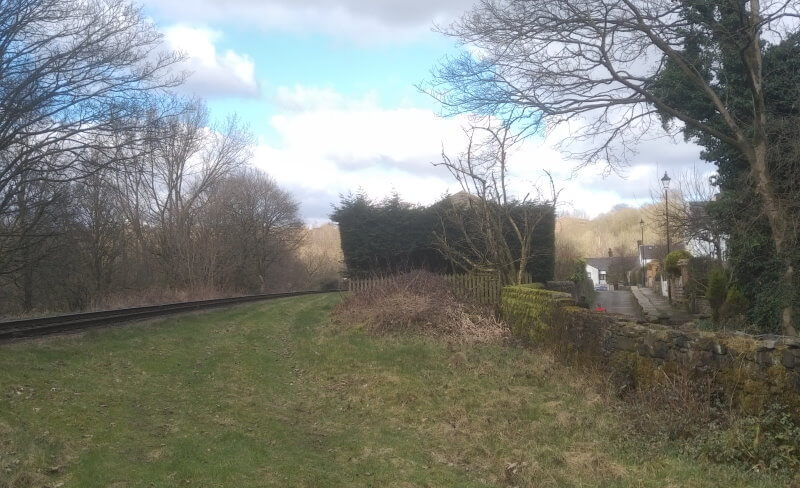
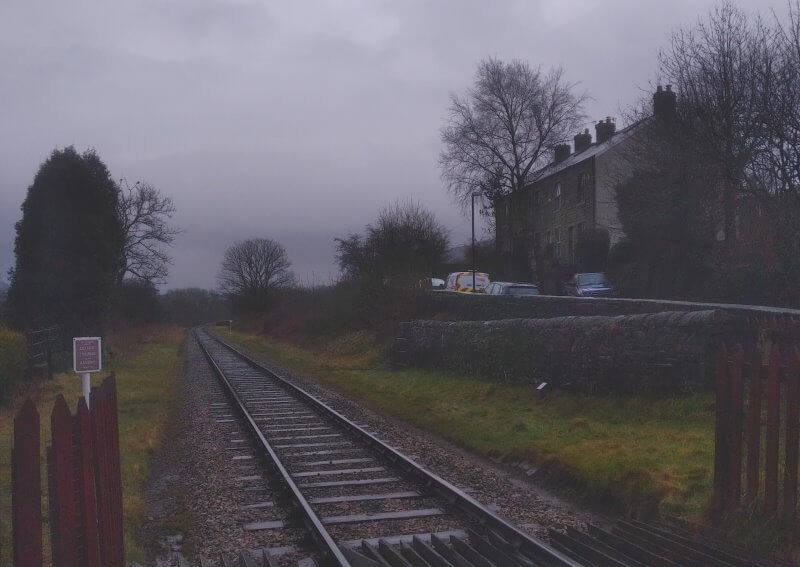
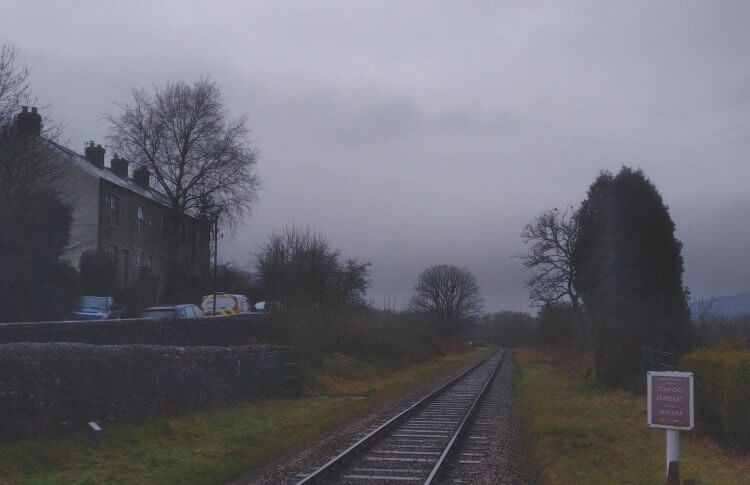
Generally, if your home backs on to a railway line, or the railway line is clearly visible and be heard from your house or flat or felt through vibrations in the property, then it will be considered by most buyers to be located near to that railway line, or possibly more than one railway line.
It’s important to know if your home falls in this category, because that characteristic can be a drawback for some buyers when you’re trying to sell the property. You’ll also be required to disclose the presence of the railway line when talking to buyers.
Advantages of owning a home close to a railway line
There can be a few advantages of being the owner of a home that is situated close to a railway line, particularly the fact that it implies you’re not that far from a train station. This can be a very strong benefit for would-be homeowners who would like to rely on using railways for their commute, as they will likely want to buy a property within walking distance of a train station.
The UK is also on track to modernise and expand its potential rail services through the High Speed 2 railway project that will initially connect London with Birmingham and eventually add connections to Leeds and Manchester. For those people who live in any of those northern cities and need to commute frequently to London, proximity to a railway line could be a major draw. They might even make this quality the top factor they look for when searching for a home.
And some people simply like to watch trains operate, and might consider the ability to see locomotives passing by from their window as a major asset of your property. If such a person comes to your home for a viewing and a potential interest in making an offer on it, you should ensure that you talk up this aspect of the property as it will be a selling point for them.
However, as you’ll see in the next section, there are perhaps even more disadvantages to owning a house or flat that’s close to a railway line, which can hinder your ability to sell it.
Disadvantages of owning a property near a railway line
Many people who are searching for a house or flat to buy will place a premium on finding a quiet property, whether that’s buying a home in a remote location or purchasing one in a busy area that has high quality soundproofing. It’s one reason why selling a property on a noisy road can be harder than trying to find a buyer for a home that’s located on a quiet road that gets minimal foot and vehicle traffic.
Vibrations from passing trains can be a significant problem, increasing the closer that your home is to a railway line, as well as how often trains travel on the tracks and the size of those trains – for example, a cargo train will be heavier than a passenger train and likely cause much greater vibrations in your home. Vibrations can range from annoying nuisances through to potentially causing physical damage to your home, making them a clear disadvantage.
In some parts of the UK, properties located near railway lines have also reported the presence of the invasive plant known as Japanese knotweed in their garden close to the train tracks. This weed can in severe cases cause damage to a property’s foundations, and you have to disclose its presence to buyers, who might see this as a reason to lose interest in buying your home.
There are also some potential concerns about noise pollution and air pollution from trains that use the railway lines, as the sounds from the trains can be heard in some properties whilst their emissions can quickly spread to surrounding areas, creating potential health risks.
One research study has suggested that in the short term, living close to a railway line can interrupt a person’s regular sleep and affect how their cardiovascular system works. But the same study also noted that some people can adapt to these impacts, so that long-term living near a railway line does not have the same impacts. It’s highly unlikely that any buyers coming to see your property on a viewing will engage you in a scientific debate, but it’s always good to know facts that can address health-related concerns.
And the noise of passing trains can also be a huge issue, especially if the railway line near your home has many services a day. It can be overwhelming to live in such a property if you’re constantly hearing the noise of trains and their horns traveling past your home. Although some people who like trains might enjoy hearing the sounds of them passing by, the vast majority of aspiring homeowners will likely view the recurring noise from trains to be annoying.
Potential problems with selling a home by a railway line
The disadvantages of owning a home near a railway line outlined in the previous section don’t just after you whilst you’re living in the property, because they can also affect your ability to sell the house or flat. Some potential buyers might immediately dismiss your home because of its proximity to a railway line, whereas others could still be open to making an offer if you take steps to address their concerns.
Some mortgage lenders might be hesitant to give someone a home loan because they don’t see a property near a railway line as being a good investment. If a buyer defaults on their mortgage, the lender will eventually try to sell the home in order to recoup the remaining balance on the money owed to them. If the company believes that the home will sell at a reduced price because of its proximity to a railway line, they might net get all of their costs back. And that can be enough of a concern for them to refuse a mortgage, which will end that buyer’s ability to purchase your home. Thankfully, not all lending companies will share this belief.
The other problem that you might have with trying to sell your home near a railway line is that potential buyers could have any or all of the negative thoughts about that property detailed in this guide’s previous section. At that point you need to decide whether to take steps to try winning some of those sceptical buyers over, or trying to find other ways of selling your home.
Addressing buyers’ concerns when selling a home close to a railway line
Although some owners of homes near a railway line might consider their property without any changes, others might want to spend some money or time in changing the flat or house in order to address any concerns that potential buyers could have about buying your property. You can’t physically relocate your home, but there are some other steps you might consider taking.
For example, you could spend money on insulating your home to reduce the impact of the noise from passing trains, or the vibrations, or both. However, this will likely be a very expensive project that will take many weeks or perhaps even longer. As a result, it’s only really an option for those homeowners who are willing to delay a sale. The benefit of paying for insulation work is that it could resolve a core issue that potential buyers might have with your property, because the insulation might eliminate the noise or vibrations from trains on the nearby railway line.
But paying for work to insulate your home won’t be a reasonable option for homeowners that either need to sell their property in a hurry, or that lack the resources for such a project.
If that’s your situation, then another step you could take that won’t cost you any time or money upfront is to lower the asking price of the house or flat. If a buyer looks negatively at your home because of how close it is to a railway track, they might think that it is worth less than the price you’re currently seeking for the property. You could reduce the asking price by a certain amount in an attempt to entice those buyers to reconsider making an offer for buying your home.
However, if someone does make an offer at that reduced price and you’re able to complete the sale, you will receive less money from the sale, which in turn will naturally lower the overall amount of profit that you can expect to make. For this reason, lowering the price of your home near a railway track is not a viable option if you need the most profit possible from the sale.
Should your property be suffering from the presence of Japanese knotweed near the railway line, that’s another issue you will have to disclose to buyers and then think about whether you would like to remediate the problem or sell the property in its current status. Just as it will cost a lot of money and time for insulting your home to reduce noise or vibrations or both from trains on a nearby railway line, removing Japanese knotweed is a long and costly procedure. But it may have the benefit of boosting your home’s value once that work is completed.
Again, whether or not this work is the right choice for your home will depend on your personal situation, including the resources and time that you have available to dedicate to the effort.
Methods for selling your property near a railway line
When you decided that you want to sell your home located close to a railway line, the next decision you have to make is choosing which method you’ll use for the sale. Typically, the options available for selling are trying your luck with a property auction, using the services of an estate agent, attempting to sell the home on your own, or selling to a quick property buyer.
Prepare an accurate and honest budget for your home sale that includes how long you can wait to receive an offer, as well as how much time and money you could spend for any potential improvements to the property before you try and find a buyer. Rely on that budget when reviewing the various sale options to determine which best matches your needs and wants.
Trying your luck with a property auction
Property auctions require some luck, because there is zero promise about the price at which your home might sell, if it even finds a buyer. The process starts when you submit your house or flat for sale, when the auctioneer will prepare a listing with photographs of the interior and exterior of your home along with text descriptions of its main features such as number of rooms. They’ll advertise this listing on their website and possibly in local media and elsewhere.
If you choose the traditional method of auction, the sale will take place on a specified day where people can place bids on the property, with the highest bid winning. Or you might opt for the modern method of auction, through which your listing will be posted for a certain amount of time, such as 30 days, and people can place ever-increasing bids 24/7 until the auction deadline. Either way, if your property does not receive any bids then it will not sell, which can be frustrating for sellers because it effectively means they have to start all over with selling.
It’s possible that several people will be interested in buying your home, in which case they will try to outbid each other by offering higher and higher prices for the property, resulting in a decent sale profit. But you have to be prepared for only receiving a single offer at the reserve price, which is the lowest possible value at which you agree to sell your home. That’s why you need to choose a reserve price that will still work for you, even after you deduct the commission that the auctioneer will charge for the work that they did in selling the property.
Fees are typically charged as a percentage of your house or flat’s final sale price, although this amount might be lower or higher depending on which auction company you use. It’s acceptable to ask auctioneers whether they are open to negotiating a lower rate as well. And a few companies might let you pass on the burden of paying some fees to the winning high bidder.
Using the services of an estate agent
Another option for selling your home is contacting an estate agent, although this can often be one of the slowest choices for finding a buyer. It might take a number of months — or in certain worst case situations more than an entire year — before your property receives a genuine offer. Even then, the buyer can cancel their offer all the way up until exchanging contracts. For that reason, selling through an estate agent can be a stressful and time-consuming approach.
You’ll also have to pay the estate agent commission, which covers their effort in producing a listing for your house or flat, advertising it in local newspapers, online and in their offices, organising and leading viewings for potential buyers to tour the inside and outside of your home, and receiving offers along with overseeing the final stages of completing the sale. Most estate agents will make you pay fees as a percentage of whatever sale price you’re able to get for your home, which you’ll have to subtract from the total proceeds before you can understand how much net profit you can expect to take away from the sale.
It’s also possible that an estate agent might try to trick you into selling using their services by giving you an unreasonably high price quote for finding a buyer, even if secretly they know that you won’t be able to sell your home unless you do so at a lower price. The reason that they do this is to entice your business, but there’s a fairly simple way to overcome this problem. Ask several estate agents for no-obligation free price quotes for your property, and then find the average value among all of the quotes for a more honest estimate of your home’s value.
Attempting to sell the home on your own
This could be the most expensive, lengthy and stressful of the four selling options because you will have sole responsibility for every aspect of the sale. From creating and marketing the initial listing through to scheduling and leading viewings, and from considering offers through to overseeing exchanging of contracts, it’s a highly complicated process that requires a lot of time and money. It’s not ideal if you already have a busy schedule with your current work.
Because you will likely be learning by trial and error, it’s possible that you might make several mistakes along the way that delay your ability to secure a sale – unless you have assistance from any friends who are experts in the property market. This means you might be waiting for many months or possibly longer before you’re able to get an offer that is serious.
Perhaps the only clear benefit of selling this way is that you will avoid having to pay any fees to an estate agent or auctioneer, which means you get to keep all of the sale proceeds. But selling to a fast buyer without any fees can be a speedier and stress-free way to reach the same goal.
Selling to a quick property buyer
Perhaps the swiftest way to sell your home is contacting a fast buyer like LDN Properties, because our experts can within weeks complete the purchase of your flat or house, and that includes all of the necessary steps such as exchanging contracts and paying you the proceeds. That’s much speedier than you’ll experience using an estate agent, auctioneer, or on your own.
We’re able to handle the process so quickly because we have the financial resources upfront to purchase your property, without having to wait many weeks or even months for a mortgage company to approve a loan for buying your house or flat. That significantly reduces the time required for the process, and ensures you will be able to enjoy the speediest sale possible.
The reputable quick home buyers also commit to never charging sellers any commission, so you’re guaranteed to receive the total profit from whatever sale price you’re offered. When you sell via an auctioneer or estate agent you will owe them commission that will have to be subtracted from the sale proceeds in order for you to be able to calculate the net sale profit.
Fast buyers are usually able to make offers for buying the broadest possible range of homes, regardless of whether they are leasehold or freehold and no matter their shape, size, type, condition or age. For example, LDN Properties launched in 2003 has seen homes at risk of repossession, properties with Japanese knotweed in the garden, flood-damaged houses, flats with asbestos, homes with survey problems, selling a hoarder’s houses, and many other situations.
And for your extra peace of mind, ask whether a specific fast buyer is registered with the independent entity known as The Property Ombudsman (TPO), which is responsible for publishing guidelines to ensure that homeowners are guarded against possible fraud in the quick buying sector. Every registered member of TPO commits to following those rules, and it’s easy to check a company’s membership status with a quick search on TPO’s website.
You should be cautious about selling your house or flat to a company that refuses to become a TPO member (or equivalent) or cannot prove it is registered, because it might be a scam. Instead, for your protection it’s advised that you only sell to fast buyers that are proven TPO members.
Top queries and answers about selling a house near railway lines
Homeowners considering selling their house or flat quickly often have a few questions for us, ranging from the how quickly can I sell my home through to selling a home in a poor location. Here are some of the main questions we’re asked about selling a property near railway lines.
Your top questions when selling a property near railway lines
There’s no simple UK government definition for when a house or flat is considered to be a railway line, but a good general idea is that if you can either see the railway line from your property or can feel the vibrations from trains using it, then the home is considered to be near a railway line for the purposes of describing its location to any prospective buyers.
Not at all, there are several advantages and disadvantages of owning such a property, and some buyers might actively be seeking a home near a railway line. But you have to prepared for the fact that other buyers will lose interest in your property once they find out that it is located close to a railway line, although you might be able to take some steps to resolve their concerns.
Some owners of homes near railway lines have invested in soundproofing their properties if the noise from trains is a concern, or paying for work to minimize vibrations from passing trains. This can make the property more appealing to buyers who are wary about the proximity to railway lines, but you shouldn’t do this work if you don’t have the time or money for it.
Yes, but it will reduce your overall sale profit. If you’re finding that few buyers are interested in making an offer on your home because of its proximity to a railway line, you could consider reducing the sale price. This might generate interest from a greater number of buyers, but it has the disadvantage of reducing your net sale profit if someone makes an offer at that lower price.
Using a fast home buyer like LDN Properties can be a good option, because these companies are able to within weeks finalise the sale, and that includes paying you the full proceeds and exchanging contracts. When you use an auctioneer or an estate agent you might be waiting at least a few months, and with the latter choice perhaps even more than a full year.
Not necessarily, it will depend on the method of selling that you choose. You will have to pay commission in the even that you rely on an estate agent or an auctioneer to sell your property. But if you use a fast home buyer, the reputable companies will never charge you any fees, which means you’ll maximise you profit by receiving the full proceeds from the sale price.
Because the trustworthy companies belong to a third party entity called The Property Ombudsman (TPO). This organization issues rules which guard homeowners against scams in the quick buying sector, and all registered TPO members must adhere to those policies.