
Quick navigation
Owning a home that is located on or close to a roundabout can create some possible complications when you’re attempting to sell the property, including concerns buyers might have about noise and air pollution. This guide explains those issues and also offers some important advice on the best approach to improve your prospects of getting a quick and fair offer.
- Making the decision to sell your house or flat on a roundabout
- Buyers may worry about noise with a property on a roundabout
- Pollution can make it harder to sell a home by a roundabout
- Are there reasons why a buyer may want a property on a roundabout?
- Your options for selling a flat or house near a roundabout
- Selling property on a roundabout: Frequently asked questions
Making the decision to sell your house or flat on a roundabout
Throughout the UK, whether in city centres, suburbs, the countryside or elsewhere you can often find a roundabout – a circular traffic junction with traffic going clockwise, and no traffic lights. They help to keep vehicles moving safely and can have one or more lanes.
There are estimated to be 25,976 roundabouts in the UK, second in number only to France, according to Discover Cars. And the prevalence of roundabouts means that you can often find homes located near them.
If you are planning on selling your home, whatever the reason – whether that’s due to a change in your family situation such as a divorce, needing to raise funds to cope with financial difficulties, moving overseas or anything else – this guide explains what to expect from the process.
You’ll not only learn about the pros and cons with which buyers might view your property, but also get tips on the best way to go about attracting a competitive and speedy offer.
Buyers may worry about noise with a property on a roundabout
Pollution can make it harder to sell a home by a roundabout
Another reason why you might be struggling to find a buyer for your property near a roundabout is that many people could worry about living close to vehicles that emit pollutants.
Exposure to air pollution from cars, buses, lorries and other vehicles is known to cause health problems like difficulty breathing in people, particularly those with existing respiratory conditions like asthma. Emissions will be higher at roundabouts that have heavier amounts of traffic.
And the costs of treating these health problems ranges between a massive £8.5 billion and £20.2 billion each year, according to House Grail. So buyers are likely to question the impact of air pollution on your property.
In busy traffic areas such as cities this could require having to keep your windows closed at all times to reduce the negative impact of the emissions inside the home. This kind of restriction may be a major concern for certain buyers and they could lose interest in making an offer.
Are there reasons why a buyer may want a property on a roundabout?
Just because there are a few prominent explanations for why someone might be wary about buying a home on a roundabout, which doesn’t mean your property will never sell.
There are also reasons why people could be interested in your house or flat even if they have concerns about the nearby roundabout. These factors could outweigh any worries that a buyer might have, and they could go ahead with making an offer.
Location can be a major selling point for many properties, and this could be why someone wants to own your home, regardless of their concerns about the roundabout. If your house or flat is situated in a neighbourhood with great amenities and high demand from buyers for properties, it’s more likely that people will be willing to overlook the roundabout nearby.
The type of home that you are attempting to sell could also be the deciding factor for a buyer in whether or not to make an offer. If your property has everything that they are looking for in terms of space, rooms, and other elements, they may assess the plus of achieving their property goals and the negative of living near a roundabout and decide it’s worth making an offer.
Your options for selling a flat or house near a roundabout
As you get ready to seek a buyer for your property located close to a roundabout, you will have to select which method to use for selling the flat or house. The four usual choices are selling to a quick home buyer, selling at an auction, selling on your own or selling with an estate agent.
Below you’ll find information about how each of the methods works, and you will find out that there are advantages and disadvantages with each based on the time taken, costs involved and more. For example, selling to a no-fee quick buyer means that you can avoid paying any commission, whereas selling via an auctioneer or estate agent will charge you fees, and this will increase your total expenses because this will be deducted from the sale proceeds.
To help with narrowing down the options, you could make a note of your top aims with the sale of your property, including how fast you want to find a buyer, whether you can accept paying any commission, and your goal sale price. Then compare these factors against the specifics of the four selling methods in order to identify which of them best matches your needs.
Selling to a quick home buyer
One option for selling your house or flat by a roundabout is to get in contact with a quick home buying company such as LDN Properties. These businesses are known as quick buyers as they already have the financial resources needed to immediately purchase properties, with no waiting for many weeks or months to get approved first for a mortgage to afford the home.
This fact means that the typical schedule for selling this way is just a handful of weeks, and this includes the important final steps of paying you the sale proceeds and exchanging contracts. For homeowners who are trying to sell as fast as feasible, this is usually an excellent choice.
Quick buyers can also be a good choice when selling a home near a roundabout because they will not share the same concerns that private buyers will have that intend to live in the property. These companies make fair and swift offers to purchase almost any freehold or leasehold home and they will not lower their offer just because of its age, condition, location, shape, size or type.
LDN Properties, which was founded roughly two decades ago, has made many varied purchases across the UK, with a long list that includes not only properties near roundabouts but also homes on a slope, flats with an absent freeholder, houses of multiple occupancy, half-finished properties, homes that have a loft conversion, flats situated near the coast, houses that are located near to an industrial estate, properties that do not have a structural warranty, flats with noisy neighbours and more.
Another key benefit of selling to a quick buyer is that the legitimate companies will never charge you any commission, which means that you are guaranteed to receive the full sale proceeds. If you’re trying to reduce your costs when selling, this can be a good way to do that, particularly when compared to auctioneers or estate agents that will charge you commission.
Selling at an auction
Or you might be interested in trying your luck with a property auction, where people will be able to place bids of increasing value on your home near a roundabout. The top priced bid at the time that the auction ends is named the winner and the person that is buying your property.
But this can be a very unpredictable way to sell a house or flat, and it could end up that you do not get any bids on your home, which means that it does not sell. Then you would need to start again with trying to find a buyer, possibly extending your selling timeline by much longer.
Alternatively, you might receive just one bid at the reserve price – this is the lowest price agreed with the auctioneer at which you can accept your property selling. A bid at this amount is considered a legally binding sale that the person who placed it could sue to enforce, in the even that you try to abandon the sale of your property once the auction is over. That’s why you need to carefully choose a reserve price that should produce a profit from the sale, even after paying the auctioneer their fees. If you don’t, you risk selling at a loss or only breaking even with it.
As a guide, the average auctioneer will charge commission at about 2.5 percent of your property’s final sale price, although it may be lower or higher than this rate. This will increase your expenses with selling as the fee will be taken out of the eventual proceeds. If you want to reduce your total costs then you may want to consider selling to zero-fee quick buyer.
An auctioneer charges this fee for the effort that they put in with selling your home, beginning with developing and advertising a listing that features photographs of the interior and exterior of the property and describes its main features. They will also host the auction, and work with both you and the buyer to ensure the successful completion of the sale after the auction.
This can be a relatively slow process for selling any type of property, starting with a waiting period of many weeks or even months between the day on which you decide to sell this way and the day on which the auction happens. If your home does sell at the auction, the buyer then typically has about a month to sign all of the required documents and complete their other steps needed to finalise the purchase, adding even more time to your total schedule.
Selling on your own
A third choice for selling a property close to a roundabout is doing so without any help from a third-party like an estate agent or auctioneer. This puts the onus on you to handle every task needed to find a buyer, including putting together and marketing a listing, organising viewings to give people the chance to see the home, hearing offers and ideally getting one to a final sale.
This is a huge amount of work for anyone and it will require a lot of your time and also has the potential to be very stressful. For these reasons, selling on your own is only recommended if you have previously had success with finding a buyer for a property near a roundabout, or if there is a sufficiently skilled friend or family member that can help you with the sale for no fee.
Without this kind of experience, it might take you more than an entire year to find a buyer. And even if you get an offer, the person that made it could change their mind and cancel it, causing the sale to collapse. They are able to do this without facing any penalties so long as contracts have not yet been exchanged. And it will inevitably extend your overall selling timeline even further because you will need to begin again with trying to find another buyer.
The only clear advantage of selling without any assistance is that you avoid having to pay commission to an estate agent or an auctioneer once your home sells, which lowers your expenses. Yet you could find that this saving is cancelled out by the money that you will need to spend on advertising your property’s listing and other steps involved with the selling process.
If you are determined to not pay any commission when selling your home but think that trying to sell solo will be too much work, think about selling to a quick buyer like LDN Properties. These companies make swift and competitive offers to purchase almost any type of home, and they will never charge the seller any commission, so you’re assured of getting the full sale proceeds.
Another perk of selling to a quick buyer is that the process should be much more rapid than selling on your own. These companies can usually finalise the purchase of most properties within a few short weeks, and that includes the important last step of exchanging contracts.
Selling with an estate agent
The final option for selling your home near a roundabout is enlisting the help of an estate agent. They will handle most of the tasks needed to find a buyer, such as putting together a listing and advertising this online, in their office and in local newspapers, scheduling viewings to give people tours of your home, hearing offers from buyers and taking one to exchange of contracts.
This is a significant amount of work and it can also take a very long time, so you should not be surprised if takes many months or even more than a full year to sell your property. That’s not the best situation for those homeowners who are trying to find a buyer as fast as they can.
Remember also that someone can make an honest offer to purchase a house or flat but then late reconsider and cancel the offer, which will cause the sale to fall apart. They are allowed to do this without facing any risk of penalties, so long as contracts have not yet been exchanged. For you, it means adding more time to the selling schedule as you start over in seeking a buyer.
If an estate agent manages to sell your home, they will charge you commission that will add to your expenses because it is subtracted from the eventual sale proceeds. Typically, this is within the range from 1.15 percent to 1.40 percent of the property’s sale price, but it can be higher or lower than this, as Compare My Move notes. So if you are seeking to reduce your costs when selling your property, you may want to review no-fee options such as selling to a quick home buyer.
Beware also that some estate agents are known to try a trick of giving you an attractive-sounding high quote price at which they say your home will sell, even if they secretly know that it is only likely to get offers at a much lower value. They do this to convince you to sell using their services, so that they can benefit from the commission they’ll charge on the sale.
Thankfully, you can prevent falling for this trick with some free and fast work, starting with asking several estate agents to give you no-obligation quotes. Then look on property sale websites such as Rightmove and Zoopla and write down the current and past sale prices of properties like yours that are also located on or near a roundabout in your region. Finally, calculate the average of all these prices to get a better rough estimate of your home’s possible sale price.
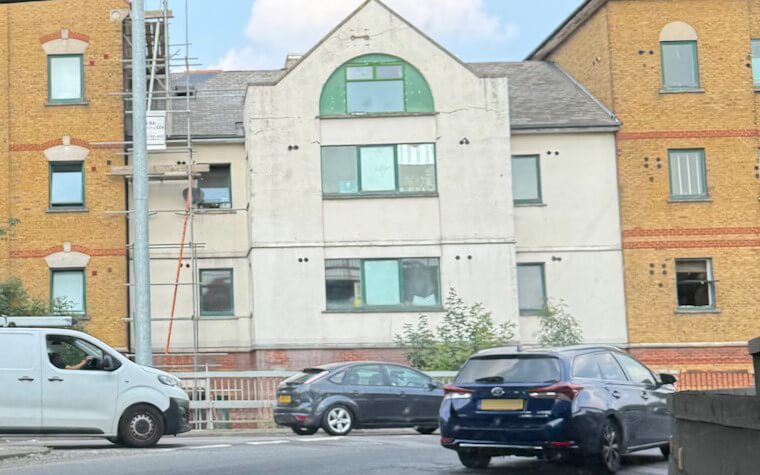
Selling property on a roundabout: Frequently asked questions
Launched roughly 20 years ago, LDN Properties often gets queries about selling a home near a roundabout, so here you can discover our answers to some of these most asked questions.
Your top questions when selling a property on a roundabout
There’s no strict rule for this but a reasonable approach is to consider a house or flat to be on a roundabout when it is either on the exact perimeter of a roundabout or within one or two streets’ distance from the roundabout. There are a few concerns that prospective buyers might have about such a property, which could create some challenged with trying to sell it.
Yes, you might find that the main concern that prospective buyers will have about making an offer on your property is the noise from the roundabout. In addition to the general noise of cars, buses, vans and other vehicles, there can also be temporary noise from people playing music loudly when driving, using their car horns and more that can be heard inside the home.
Cars, vans, buses and other vehicles that might use the roundabout near your house or flat can produce significant emissions that pollute the nearby air, reducing the qualify in the life in the area. This could be a concern for people that might otherwise want to make an offer on your property, particularly for those with asthma or other preexisting respiratory conditions.
Despite the noise and air pollution concerns linked to properties that are on a roundabout, there are other factors that could keep buyers interested in your home. For example, if the property is exactly what they are looking for in terms of size, rooms and garden, or if it is in a prime location where demand for properties is high, they may be willing to overlook their concerns.
You have four standard choices to try finding a buyer for your home near a roundabout, and they are selling to a quick buying company like LDN Properties, selling with an estate agent, trying your luck with an auction, or selling without any help. There are strengths and weaknesses with all four options based on their duration, costs and other factors.
Getting in touch with LDN Properties or another quick home buyer may be a good choice because the entire timeline should only be a few short weeks from beginning to end, and this includes the vital last steps of exchanging contracts and paying you the sale proceeds. The alternatives of using an estate agent, an auctioneer or selling on your own can all take many months.
If you choose to sell your house or flat to a zero-commission quick buyer like LDN Properties, or if try to find a buyer without any assistance, then you will not have to pay any fees on the sale. But if you opt for selling through an estate agent or at a property auction then they will charge you commission for a successful sale, and this will be subtracted from the sale proceeds.