
Quick navigation
Many houses and flats throughout the UK are constructed close to external power lines and pylons. If you own such a home, you may face extra problems when selling, once people see the power lines. Thankfully, there are still options available to you.
- When is a house or flat considered to be near power lines?
- How proximity to power lines can affect the sale of a property
- Understanding health concerns about homes close to power lines
- Advantages of disadvantages of owning a property near power lines
- Options when selling your house or flat near power lines
- Frequently asked questions about selling a house near power lines
When is a house or flat considered to be near power lines?
There is no UK government policy that defines when a freehold or leasehold house or flat is considered to be "near" power lines, which transmit electricity around the country. Nor are there are any legal limits on how close a new home can be built to power lines. Some reports have suggested minimum distances between homes and power lines to prevent against potential health harms from electromagnetic frequencies, although views on this issue differ.
Existing UK policy only recommends that properties be located no less than 50 meters, or about 164 feet, from power lines, substations and other energy structures. But this is a guideline and not an outright prohibition, despite calls from some experts to create such a standard.
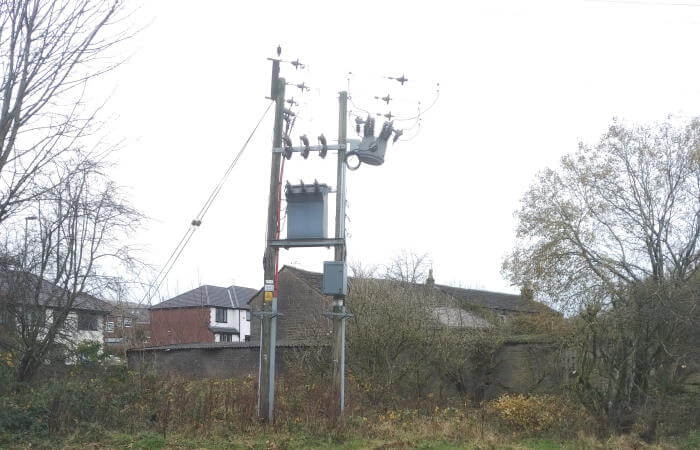
The vast majority of power lines near homes are large pylons or towers with cables that carry energy, and they emit electric and magnetic fields. The biggest power lines are owned and operated by National Grid, and smaller power lines are managed by independent energy companies, according to the website Powerwatch, which is a resource focused on technical aspects of power lines.
Because power lines and pylons take up so much space, they are often found in rural or suburban locations rather than within cities, where energy lines might be buried or otherwise concealed. That means people who own properties in less urban areas are more likely to be closer to power lines.
Housing developments in particular are often constructed close to power lines, because it makes it easier for the property developer to ensure electricity to all of the homes. If your flat or house is situated nearby to power lines, you might face some hurdles with trying to sell it.

How proximity to power lines can negatively affect the sale of a property
Homeowners looking to sell their properties could have a harder time attracting interest from buyers depending on the distance between their home and any nearby power lines. The closer that a property is to power lines, the general rule is that the difficulty of finding someone to buy your home will increase.
That’s primarily due to two overarching concerns that potential buyers will have. Firstly, the negative visual impacts of owning a home close to power lines. Secondly, possible health impacts from the power lines caused by the electromagnetic frequencies that they emit to transport energy.
These concerns that buyers might have do not mean that it will be impossible to ever sell your home, but it’s crucial to understand them before you attempt to sell your property.
Visual impacts of a property close to power lines
Appearances matter with selling your home, and an exterior visual concern about the property might be enough for someone to lose interest in it, even if the interior of the home meets all of their requirements for a dream house or flat. Typically, this means homeowners looking to sell need to ensure that the outside of their property looks in its best condition.
That’s relatively quick and easy work, but unfortunately no such fixes exist when the buyer’s biggest concern is that they see large power lines and pylons nearby. There’s very little you can do in this situation, because even possible solutions will take a lot of time and money. For example, you could attempt to install trees in your garden to block out the view of the power lines, but that’s an expensive and resource-intensive effort that could reduce your ability to make a profit with the sale.
As such, if you own a home near power lines then you have to accept that many people will not want to buy it because the power lines and pylons will be in their daily line of sight.
Health impacts of a property close to power lines
The other leading way that proximity to power lines can hinder your efforts to sell a house or flat revolves around uncertainty on whether the structures are responsible for harming public health.
When a prospective buyer’s main complaint about power lines is that they simply don’t like the aesthetic of seeing the structures on a daily basis, there’s very little that you can do about this. But when their top concern with your home is based on some fears they might have over the possible negative health impacts of the power lines, this is something you can at least address.
Some people will refuse to even debate their beliefs about whether living close to power lines can negatively affect a person’s health. But others will at least be open to talking about it, and you might still be able to salvage a sale. The next section offers greater detail on what to know about the specific health issues, and how to inform yourself when talking to potential buyers.
Understanding health concerns about homes close to power lines
It’s important to explore further why some potential buyers might be discouraged from making an offer on your home because of its proximity to power lines. One buyer might give you a serious offer but then start to do some research about possible health risks from power lines, and then rescind their offer, making the sale fall through. Another buyer might have read certain information about the health concerns and lose interest in your home as a result.
One useful step that you can take when owning a home near power lines is educating yourself on health risks. You can help to debunk such fears should a prospective buyer raise them with you at any point.
Perhaps the greatest concern that some buyers have about power lines is that they can cause health harms to humans. One issue that some critics of power lines have raised is that the electromagnetic fields, or radiation, that they emit have the potential to cause cancer in children and adults.
The National Cancer Institute (NCI), which is the US government’s top cancer research organisation, says that international concerns about this potential cancer risk in the US, UK and elsewhere stem in part from a 1979 study. That research suggested a greater potential for children to suffer leukaemia, a blood cancer, the closer that their homes were located to power lines. Some people continue to take the findings of that study as the final word on the matter. That’s why you might hear buyers raise the cancer issue when asking about your property.
But the NCI also notes that subsequent research has downplayed the link between power lines and child leukaemia. Many scientists have therefore taken a step back from any outright declaration that living near power lines means people are more susceptible to various types of cancer.
The UK’s Department of Health in the early 2000s then commissioned an independent study into the issue, and an advisory group conducted research into the possible health threats from living close to power lines. Their first interim report was unveiled in April 2007 and said there was some link between cases of leukaemia in children and living nearby to power lines.
The report suggested establishing a restriction of new building less than 60 meters, or about 197 feet, of power lines. Instead, the current policy is that it’s recommended for people to live more than 50 meters, or about 164 feet, from power lines to ensure against any potential health risks.
Advantages of disadvantages of owning a property near power lines
Whether your home is leasehold or freehold, if it is situated near to power lines and pylons then you could face a more complicated path to finding a buyer. There are a number of potential disadvantages of owning such a house or flat, but there are also one or two advantages that you should know about.
Advantages of owning a property near power lines
One benefit of owning a house or flat near power lines is that you’ll be better protected against potential damage whenever lightning occurs. The pylons and power lines will work as a lightning rod that may draw lightning away from your home during a storm.
And homes near power lines are often typically found more in rural and suburban areas. Many buyers place a premium on properties that are not in heavily populated cities, and so they might be willing to overlook a home’s proximity to power lines if its location is highly desirable.
Disadvantages of owning a property near power lines
As outlined in this guide, many buyers will consider power lines near a property to reduce the perceived value of the home. This could be because of the buyer’s concerns about the look of power lines, or the potential health risks, or both. The power lines create an extra hurdle for selling your home, which can sometimes mean it takes much longer to attract a serious offer.
As a result, owning a home near power lines can reduce its value anywhere from 2 percent to 9 percent or more, according to the website Property Road. And if you have to settle for a much lower sale price, this will in turn reduce your net sale profit.
The team at EMFS.info, have seen that mortgages may be refused if very close to power lines. And the website says other lenders might also be considering adopting such policies, which would make harder to get a home loan.
If buyers are unable to get mortgages, then that will naturally reduce the number of people who will have the financial resources to buy your home. That’s one reason why it can be useful to consider alternative methods of selling that won’t require a mortgage application, such as contacting a quick home buying company.
Options when selling your house or flat near power lines
When you are ready to sell your freehold or leasehold house or flat near power lines, you’ll have to make a decision on which method you want to use for finding a buyer. You can choose between a property auction, an estate agent, or a fast buyer. There are certain pros for using each option, and some cons about various approaches that you should learn about.
Be honest with yourself when weighing your options and consider your needs about the sale, including how quicky you need to find a buyer and the sale price required. Develop a true budget for the sale and consider every possible aspect so that you can make a choice that provides the best balance of speed and profit when selling your property.
Selling your home via a property auctioneer
You could consider an auction to sell your home. Selling this way can be a risk, because there’s no certainty on the value at which your home might sell. You could get many bids, driving the price up and earning you a decent profit. You might get no bids, in which case your home won’t sell and you’ll have to start over with finding a buyer. Or you might only get one bid at the reserve price, which is the lowest value at which you will accept selling.
Auctions can sometimes be a good option for homes with potentially problematic elements, such as being near power lines, because of the diverse mix of bidders. However, you should ask specific auctioneers whether they have any experience with selling properties near power lines.
When you sell this way, you can expect a delay of at least several weeks between the day that you list your home for sale and the day that the auction takes place. If your house or flat does sell, the buyer will then have 28 days from the sale to complete the required paperwork and other steps for buying your home, making for an overall sale timeline of a few months.
And auctioneers will charge commission often based as a percentage of your property’s sale price. Some auction houses might let you pass on certain fees to the buyer, so always ask about this possibility.
Selling your home via an estate agent
Alternatively, you might be thinking about using an estate agent to sell your home. They’ll advertise this listing in local media, online and in their office to generate interest from buyers. And they will organise and lead viewings for potential buyers to tour your home.
Not having to do any of that work can be a stress relief for sellers, but there are some downsides. Many homeowners find that viewings are intrusive and take up a lot of their free time. And it can take a number of months or even longer than a year before anyone makes a serious offer to buy your property. Even if they make an offer, there’s always the risk of the sale falling through if they can’t get a mortgage or simply walk away from the sale.
And you’ll have to pay commission to estate agents, usually charged as a percentage of your house or flat’s final sale price. This will have to be deducted from the total sale proceeds, which will naturally reduce the net profit that you make from the sale. If your main goal with selling is to make the largest profit possible then this is a clear drawback.
Just as you should check with an auctioneer whether they have sold homes near power lines, you must ask the same question of individual estate agents. Someone who has found buyers for such properties many times in the past is a good match, and likely to know how to pitch your home to potential buyers. But an estate agent who has never sold a home near power lines might lack the expertise to attract any interest from people who are looking to buy a property.
Selling your home via a quick property buyer
Yet another way you can sell a flat or house near power lines is to get in touch with a fast home buyer like LDN Properties. These companies are able to make competitive and quick offers for buying a huge range of homes, regardless of their age, size, type, condition or shape.
Fast property buyers typically have cash reserves immediately available to purchase homes. As a result, they can usually finalise the entire process of buying a home in just a handful of weeks. That’s usually much swifter than you can expect when selling through other approaches, and it makes quick buyers a good match for those owners whose top priority is getting a speedy sale.
And their ability to consider buying almost any type of property makes them an ideal choice for owners of homes that might have potentially negative features that create barriers for selling via an auctioneer or estate agent – for example, selling a house with radon. In addition to homes near power lines, fast property buyers have plenty of experience with buying flats with cladding, houses with septic tanks, properties where the owner hasn’t got an Energy Performance Certificate, and many other properties.
The reputable quick home buying companies also never charge homeowners any fees when purchasing their properties, which is a favourable contrast to the fees that you’ll have to pay if selling through an estate agent or auctioneer.
Top queries and answers about selling a house near power lines
Homeowners looking to sell their home quickly typically have a range of questions for our team, ranging from selling a tenanted property through to selling a dilapidated home or selling near a mobile mast. Here are some of the top questions we’re asked about selling a property near power lines:
Frequently asked questions when selling a property near power lines
Currently UK policy is that new houses or flats should be located at least 50 meters, or about 164 feet, from power lines in order to guarantee against any potential health problems. But this is not a strict mandate and some properties might in the past or future be built a shorter distance. Many homes in the UK do have at least the 50 meter distance, if not more.
This is a complicated area of debate, with some experts suggesting that a close proximity to power lines can increase the risk of developing cancer as a result of exposure to the electromagnetic frequencies that the power lines emit. Other experts suggest this risk is overstated, and efforts to research the issue continue in the UK and overseas.
Some buyers will consider power lines to be eyesores and that can be enough for them to lose interest in your home, even if they like the interior. Other buyers might be willing to purchase your property but they could get rejected for a mortgage.
No, it depends on which method of selling you’d like to use. If you rely on an auctioneer or an estate agent then you will have to pay they commission for the work that they do in selling your home. But if you use a fast home buyer like LDN Properties then you will not have to pay any fees and you’ll receive the full sale proceeds.
It will hinge on your choice for how to sell your home, with a fast property buyer often being your best option as they should be able to complete the purchase of your house or flat within a few weeks. An auctioneer can take at least a few months when you consider all steps of that process. If you sell via an estate agent it might take more than a year before you get an offer.
The trustworthy quick home buying companies are often registered with an organisation known as The Property Ombudsman (TPO), which issues rules to protect owners against fraud in fast buying sector. All members of TPO must follow those rules, giving you extra assurance. Be wary of any company that cannot prove it is a member of TPO, as it may be a scam.
It’s possible, because some auction companies have a policy that allows the seller of a property to pass on the duty to pay certain costs to the winning high bidder. If you are thinking about selling your house or flat near power lines by using a property auction, you should call specific auctioneers and ask whether it might be possible for you to avoid some fees.