
Quick navigation
Owners of properties that have the invasive plant Himalayan balsam in the garden could find that it’s more difficult to sell this type of home, because of buyers’ potential concerns about the plant. This guide explains those reasons but it also offers sellers advice on how getting a competitive and speedy offer from a buyer can still be achievable.
- What is Himalayan balsam?
- Tips for identifying Himalayan balsam when thinking of selling
- How Himalayan balsam can damage a property
- Why buyers might not want a house with Himalayan balsam
- Removing Himalayan balsam before selling your home
- Four options to sell a property that has Himalayan balsam
- Top queries about selling a home with Himalayan balsam
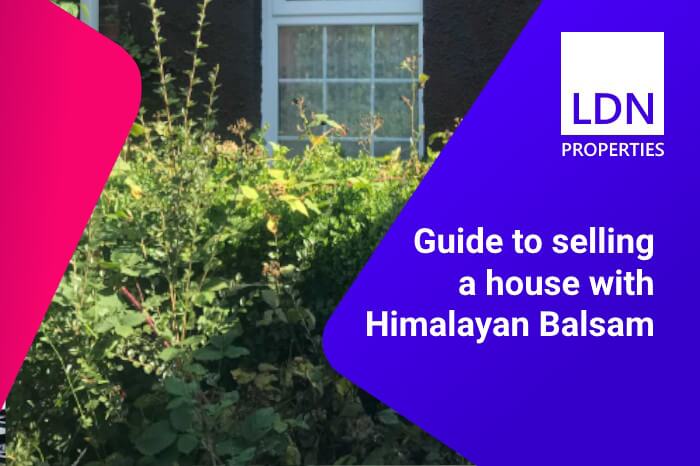
What is Himalayan balsam?
Himalayan balsam, also known by its scientific name Impatiens gladlier, is an invasive plant found in gardens at properties throughout the UK. Since 1981, it has been illegal for anyone to introduce the plant in the wild or to plant it at their home.
It’s designated as an invasive plant because it’s not a species that naturally grows in the UK. As its name suggests, Himalayan balsam is a plant native to the Western Himalayas. It was first introduced the UK when seeds of the plant were brought over in 1839. The plant was able to spread rapidly because it can drop anywhere from 800 to 2,500 seeds that grow fast.
The UK Government in August 2017 officially listed Himalayan balsam as an invasive plant of special concern, noting that it is widely spread throughout England and Wales.
If you own a home that you’re trying to sell, you could find that the presence of Himalayan balsam in the garden creates some difficulties by making some buyers lose interest in the property.
No matter the type of property that you’re looking to sell, if it has a garden or other green space and Himalayan balsam is present, this might make it harder to get interest from buyers.
The following sections of this guide explain specifics about exactly what Himalayan balsam is and why it causes problems for homeowners trying to sell their properties. It also outlines steps that you could consider taking in order to remove the invasive plant from your home before selling, as well as tips on the best options for getting a quick and fair offer from a buyer.
Tips for identifying Himalayan balsam when thinking of selling
It’s a good idea to check your garden for the presence of Himalayan balsam before attempting to sell your home, given the problems it could cause with selling.
There are several facts about the appearance of Himalayan balsam that should help you with finding it, including that it will typically grow to a height of between one and two metres, according to Wikipedia.
The plant has a smell that some people describe as being pungent, so if you do not detect any aroma from something that you think is Himalayan balsam, it could be something else.
Stems of a Himalayan balsam invasive plant have a reddish colour and the leaves are green and jagged. The plant grows flowers that present in shades of pink and purple.
The appearance of Himalayan balsam’s leaves and stems is somewhat similar to Japanese knotweed, which is another invasive plant that can grow speedily and spread through and under properties. Japanese knotweed is considered much more problematic for homes because of its potential to cause structural damage, and it’s also significantly harder to remove and keep it gone.
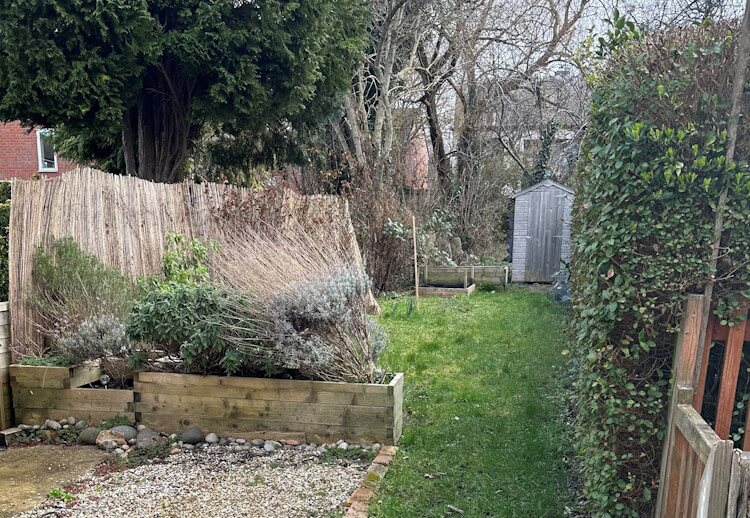
How Himalayan balsam can damage a property
If Himalayan balsam seeds are blown onto your property, there’s a very high likelihood that they will take root and the invasive plant will then start to swiftly become a large problem.
Himalayan balsam can spread very quickly, as
The Wildlife Trusts website notes. The plant drops hundreds or even thousands of seeds that can swiftly grow, making the problem even worse, and potentially stretching the reach of the invasive species to neighbouring properties.
The main reason why Himalayan balsam causes trouble in the garden is that it kills off plants that are native to the UK, because it takes the water, light and nutrients that they need to survive – and this in turn can lead to harmful changes to the ecosystem.
If your property is located close to a river or other waterbody, Himalayan balsam is also known to cause erosion of the soil in the water, in turn polluting it and harming fish and other wildlife.
Other invasive plants, in particular Japanese knotweed, can cause even more severe damage to homes because it can make concrete or tarmac less stable. This in turn can sometimes cause subsidence, which would be another factor that may make some buyers lose interest.
Why buyers might not want a house with Himalayan balsam
When you start looking for buyers for property with Himalayan balsam, you need to know that some people could be wary about making an offer because the invasive plant is present.
Any prospective buyer who might be interested in your property because of its garden could have second thoughts for several reasons. The first is that they could worry that the stress of dealing with the invasive plant, including the work involved with having to remove it and ensure against its return, is a task that they would not be willing to undertake as the new owner.
Potential buyers who have a strong interest in gardening could fear that Himalayan balsam would make it impossible to realise whatever plans that they may have for the green space.
And other buyers could be concerned that the Himalayan balsam could rapidly spread and reach into the ground under neighbouring properties. This in turn may lead them to think there could be negative legal consequences, and that would be too stressful to endure.
Knowing the above reasons can help you understand why you property might not be gaining as much interest from buyers as you had hoped. But just because some people have doubts about purchasing such a home, rest assured that you will still be able to find a buyer for it.
For example, you could contact a quick home buying company such as LDN Properties, because these businesses make competitive and speedy offers to purchase almost any type of house, flat or other property – including those considered to be "problem" homes because a prominent negative issue such as the presence of Himalayan balsam.
Removing Himalayan balsam before selling your home
If Himalayan balsam is present at your house, you might wonder whether it’s a good idea to remove the invasive plant before trying to sell the property.
The plant does not have deep roots and therefore it’s fairly easy to just pull it out of the ground wherever it appears – but this does not prevent it regrowing if its seeds have already blown elsewhere in the garden. Still, removing Himalayan balsam from your garden before selling could eliminate this factor as a potential hurdle to finding a buyer for your home.
Removing Himalayan balsam from your garden is not a difficult process, as an article on the
Gardeners’ World website notes. But it could be very time consuming depending on the scale of the problem, and expensive if you decide to pay for professionals to take it away.
For that reason, many homeowners simply will not have the time, interest or funds available to remove Himalayan balsam from their properties before selling – and this is allowed.
Indeed, you can still sell your home with Himalayan balsam for a profit, by reaching out to LDN Properties or another quick buyer. These companies are well known for making fair and swift offers to buy almost any type of home, including so-called problem properties that have negative aspects that might deter other buyers, such as the presence of an invasive plant.
As the next section of this guide explains, other benefits of selling to a quick buyer include that you won’t pay any fees and that the entire process should only take a few short weeks.
Four options to sell a property that has Himalayan balsam
When you’re prepared to sell your property with Himalayan balsam in the garden, you will need to choose how you’re going to look for a buyer. The choices are selling at an auction, selling to a quick buyer, selling with an estate agent or selling without any help.
There are some specific disadvantages linked to a few of the methods, for example you might have to pay expensive commission when selling your home through an auction or with an estate agent. Other options for selling have notable advantages, such as being able to complete the sale of your property within just a few short weeks when you sell to a quick home buyer.
Before deciding on which of the four approaches to use, consider noting down your main aims with selling, including how fast you’d like to find a buyer, whether you can accept paying any commission or other fees, and your ideal selling price. Then compare these facts against the specific details of the methods below to help with finding the best match for your needs.
Selling at an auction
An auction can sometimes be a gamble when selling a home because there’s no promise that the property will sell, or at what price it might attract a buyer.
You’ll need to choose a reserve price, which is the lowest price at which you are comfortable selling your home. Pick a value that should still generate some profit from the auction after paying the auctioneer their commission, because a qualifying bid at the reserve price is a binding legal agreement to sell your home, and the buyer could sue to enforce it.
Auctioneers usually charge fees at about 2.5 of a property’s auction sale price, and this increases your expenses because it will be subtracted immediately from the proceeds. You might be able to negotiate a lower rate of commission with the auctioneer or have the winning top bidder pay some of your costs, so inquire about whether this might be feasible.
You’ll be charged fees by the auctioneer for the work that they’ll do in selling your home, which begins with creating and advertising a listing that describes your property and features photographs of the interior and exterior. Next they’ll host the auction itself and then oversee a successful sale if someone places a bid at the reserve price or higher.
This is not the fastest method for selling a property, because there is a lot of waiting involved, starting with several weeks or even months between when you opt to sell your home this way and the day on which the auction happens. If your house does find a buyer at the auction, they’ll then have about 28 days to sign the relevant documents and complete their other tasks to finalise the purchase – and some auctioneers may give them even more than 28 days.
You might be able to negotiate a shorter deadline with specific auction houses, so it’s always worth inquiring about whether this could be an option for the sale of your property.
Selling to a quick buyer
If you’re concerned that nobody will be interested in a home that has Himalayan balsam in the garden, consider getting in touch with a quick home buying company such as LDN Properties. That’s because these businesses are experts are making competitive and speedy offers to buy homes regardless of any problems or their age, condition, location, shape, size and type.
LDN Properties, which launched more than 15 years ago, has experience making fair and fast offers to buy not just, houses with a tree protection order, flats with problem neighbours, properties without planning permission, mundic houses, flats with cladding, holiday lets, half-finished properties, prefab homes, Laing Easiform houses, properties located near to railway lines, flats with very little time left on the lease agreement, houses that have a leak, vandalised homes and many other varied scenarios.
Not only will a quick buyer give you a swift and fair offer to purchase your home even with the garden having Himalayan balsam, they’ll also provide a speedy timeline for selling. Usually it takes only a handful of weeks to complete the sale of a home to a quick buyer, and this includes the important steps of exchanging contracts and paying the seller the full proceeds.
Quick home buyers are able to move so rapidly because they don’t have to wait for several weeks or months to first obtain a mortgage that will cover the cost of purchasing your property. These companies already have the financial resources in place to buy your home fast.
Honest quick buyers also never charge any commission, which will assist you in reducing your overall selling expenses. That compares well to some alternative methods of selling, specifically estate agents or auctioneers, because they will charge you commission if they succeed in selling your home. This will add to your costs because the fee is taken out of the sale proceeds.
Selling with an estate agent
Like auctioneers, estate agents will do the vast majority of the work required to sell your house with Himalayan balsam. This starts with preparing a listing, which they’ll advertise in local newspapers, online and in their office. They’ll also organise viewings to take anyone interested on a tour of the inside and outside of your home. Finally, the estate agent will hear any offers from potential buyers, and hopefully guide one through to the exchange of contracts.
For putting in this effort, the average estate agent will charge you commission if they succeed in selling your property. It’s typically within a range of 1.15 percent to 1.40 percent of a home’s final sale price, but it could be higher or lower than these values with certain estate agents. The fee is deducted right away from the selling proceeds, which will increase your expenses.
This is far from the swiftest option for selling a home, because you might be waiting many months or even more than an entire year before finding a buyer.
Remember also that a buyer could make an offer to purchase your home and then rescind it and make the sale fall apart but without facing any penalties, so long as contracts have not yet been exchanged. If this happens, it will naturally extend the timeline for selling your property by many more weeks because you’ll need to start over with trying to find a buyer.
Some estate agents might also have never sold a home that has Himalayan balsam, so you should inquire with individual companies about whether they have this experience – if they do not, it implies that they might find it difficult to know how to get buyers interested in your home.
Selling without any help
The fourth method to sell a property that has Himalayan balsam in the garden is doing so without any help from an estate agent or auctioneer.
It’s a very stressful and time-consuming option because you’ll need to do everything from making and advertising a listing for your home through to scheduling viewings and hearing offers from serious buyers. That’s why you should only consider this approach if you have sold homes before or a qualified friend or family member is willing to assist you at no cost.
Otherwise, you might be looking at a timeline of more than a full year to sell your home. And just as buyers can walk away from sales through estate agents, the same is true with this method. Should someone make an offer but then withdraw it before contracts are exchanged, they can do so and not face any penalty. You’ll then have to begin again with your attempts to find a buyer for your house, which may add a significant amount of time to the schedule.
The only obvious benefit of selling this way is that you will not need to pay any commission to an auctioneer or estate agent, which reduces your costs. But this saving could be cancelled out by the funds you’ll have to spend on advertising your listing and other selling steps.
As an alternative, you could sell your property to a quick home buyer such as LDN Properties, because they will not charge you any commission and you’ll keep the full sale proceeds.
A further advantage of selling your home to a quick buyer is that they should only need a few weeks to complete the entire process of purchasing the property, and that includes paying you the proceeds and exchanging contracts. It’s a streamlined, zero-hassle and stress-free option to sell your home, particularly compared to doing so without any help.
Top queries and answers about selling a house with Himalayan balsam
If you’re a homeowner looking to sell your property with Himalayan balsam in the garden, there may be some questions you need answering before making a decision. Here are some of the top questions we’re asked when selling a house with Himalayan balsam:
Your top questions when selling a house with Himalayan balsam
Himalayan balsam is an invasive plant, meaning it does not naturally grow in the UK and was introduced here through seeds brought from the Western Himalayas in the 1800s. Some properties in the UK have this invasive plant in the garden, and it has the ability to grow and spread quickly, possibly causing hurdles to selling those homes.
The appearance of the invasive plant Himalayan balsam is a weed that has stems which have a reddish colour along with jagged green leaves and flowers that grow in varying pink and purple shades. Generally this is a similar but not identical appearance to the equally problematic Japanese knotweed. Himalayan balsam typically grows up to about two metres tall.
The main problem with Himalayan balsam is that it quickly takes up most of the space and nutrients in a garden, which kills off non-invasive plants. And because Himalayan balsam can spread thousands of seeds, it’s a problem that can spread fast and be hard to control. If the invasive plant spreads to a neighbour’s property, this can also create legal issues.
The potential harm that Himalayan balsam can cause to the surrounding non-invasive plants is one of the main reasons why buyers could be wary about making an offer on your home, as they may not want the hassle of dealing with this situation. The possibility of legal issues with the invasive plant affecting a neighbour’s garden could also deter some buyers.
It is possible to remove Himalayan balsam from a garden, and it’s a fairly straightforward process of pulling the invasive plant out of the ground – although it can leave seeds behind that may then grow, causing the problem to reoccur. You’ll need to decide whether you can spare the time, effort and potentially money involved with removing it before selling your home.
Not necessarily, because you won’t pay any fees if you sell your home without any assistance or if you sell it to zero-commission quick home buyer like LDN Properties. By contrast, if you sell your property using the services of either an auctioneer or an estate agent then you will need to pay them commission and this will be deducted from the eventual sale proceeds.
If you decide to sell your house using a quick buyer like LDN Properties, the whole process should only take a few short weeks, and this includes the exchange of contracts and paying you the sale proceeds. Selling with an estate agent, auctioneer or on your own can all take at least many months and sometimes more than a full year.