Quick navigation
Many farms in the UK consist of acres of land, a farmhouse and ancillary buildings such as barns. It’s possible to sell just a barn, usually to a developer who plans to convert the structure into a residential property to either rent out or sell. This guide details the various steps of the process, and offers tips on how to increase your odds of a speedy sale with a decent profit.
- Deciding to sell your barn
- Your potential tax liability when selling a barn
- Questions buyers may have when you are selling your barn or barn conversion
- How planning permission could affect the sale
- Options to find a buyer when selling a barn
- Selling a barn: frequently asked questions
Deciding to sell your barn
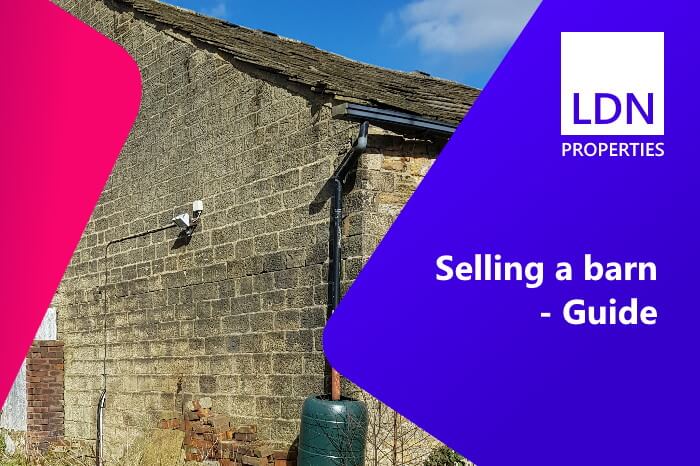
The typical barn on farmland is not a residential property and, as defined by the Cambridge Dictionary, is "a large building on a farm in which animals or hay and grain are kept" – a barn might be the only ancillary structure on your farmland, or you could have several barns and other buildings that are not lived in.
It’s possible that you want to remain the owner of your freehold farmhouse but no longer have a use for the barn. One way that you can generate some additional money is to sell the structure, hopefully for a good profit. There are many property developers who often look for large barns throughout the UK that they could potentially convert into residential or commercial buildings. These developers would then aim to either sell or rent the property following the barn conversion, hoping to make a profit.
But there are various steps to understand about the process of selling a barn, including tax considerations, queries that buyers might for you, and choosing the method of selling that works best for your individual situation. This guide details each of those factors, as well as providing some tips on hopefully making the sale of your barn go as smoothly as possible.
Your potential tax liability when selling a barn
The financial aspect of selling any property is always an important one, including how much profit you want or need to make on the sale, and also your potential tax consequences.
For the sale of many assets, which are valuable things that people own such as houses, flats or barns, you might have to pay what’s known as Capital Gains Tax if you make some gain, or profit, on the sale. This tax will often only apply to a certain amount of the profit that you earn from the sale of the barn, and often not the larger final price that the buyer pays for it.
However, this can become complicated with the sale of a barn, because these structures will usually have been included in the purchase of an entire farm, which also includes the land and farmhouse. That might make it harder to assess the amount, if any, that you will be required to pay when selling the barn, and you should get advice from a financial professional on this.
It might be possible to reduce, or even eliminate the amount of Capital Gains Tax that you have to pay. If you are selling the barn as part of a larger sale of the entire farm, and the barn could be considered part of your private residence, you may not be taxed on the sale. That’s because the tax does not apply when you sell your home. Instead, Capital Gains Tax is charged on other types of properties such as business premises, buy-to-let homes, land and inherited property. Again, a tax expert should be able to clarify your potential liability.
Note that in the situation where you are selling just the barn, and it cannot in any way be considered part of your primary private home, you will likely be liable for paying Capital Gains Tax, depending on the price at which it sells. It’s always important to plan out a budget for the sale of any property, so you’ll want to be aware of the potential tax charges that you might face.
Also, you typically won’t have to pay Capital Gains Tax on your barn in the event that you sell at a loss, which means that you make zero profit on it, because there’ll be no gain to tax. That doesn’t mean selling at a loss is a wise move, and your goal should usually be to generate a profit from the sale of any property.
Questions buyers may have when you are selling your barn or barn conversion
The primary group of potential buyers that will likely be interested in potentially making an offer on your barn will be property developers. They will be looking at whether there’s money to be made from converting the barn into a house, flat, office space or other type of property, which they could then either rent out to earn income, or try to sell the barn at a higher value.
News articles from around the UK help to show just how popular barn conversions can be, such as a recent project that turned four Leicestershire barns from the 1600s into more than 6,000 foot of office space. You might find when selling your barn that you get interest primarily from developers hoping to turn the structure into a residential property, or mostly from potential buyers planning to make the barn a commercial property.
When your barn is on the market, you can expect prospective buyers to have a number of questions about the structure before they decide on whether to make an offer. The answers that you provide could make or break someone’s interest in purchasing the barn, and that’s why it’s important that you take some time to prepare for answering questions fully and honestly.
In addition to the typical queries that buyers will have about what price you’re asking for the barn and how fast you want to sell, some other questions that you might get include:
- What is the age of the barn? It’s highly unlikely that the exact age of the barn will be the deciding factor for someone making an offer, but it’s still important. Unless the barn has been in your family for generations, it could be difficult to find information on its exact construction date. Centuries-old barns could be too unstable to convert into properties, and buyers might only be interested in selling the materials used to build them.
- What is the total size of the barn? If someone is potentially interested in buying your barn so that they can convert it into a home, office space or any other type of property, they will likely have a minimum size in mind. If the barn that you are trying to sell is too small for a developer’s project, they may no longer have an interest in buying it.
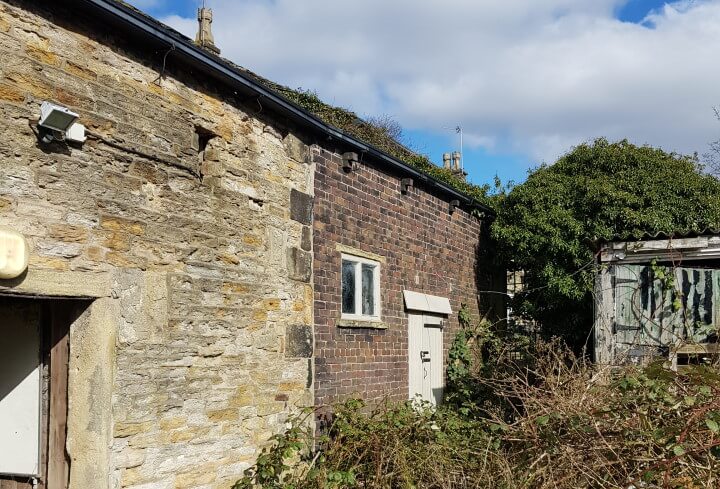
- What is the barn’s current condition? Developers who intend on converting a barn to residential or commercial property typically retain at least the exterior of the structure. They might be discouraged from making an offer if the barn is in very poor condition, for example close to collapsing. If they are looking to convert the building into any type of property, they will be looking to avoid anything that might have structural problems.
The impact of planning permission on selling your barn
Given that property developers are among the most likely people seeking to buy a barn in order to convert it for renting or sale, planning permission can have an impact when you decide to sell the structure.
Anyone who owns property, whether it’s a house, flat, barn or other building, and wants to pursue a major physical change like adjusting what the property is used for, or adding a large extension, must first get planning permission approval for the work. It can be a very expensive and time-consuming process, but it’s important to obtain the approval because otherwise you can be liable for significant penalties if you alter a property without planning permission.
You have to apply to the local planning authority of your council for getting planning permission, and they will review the work that you want to do the property – in this case, your barn. The exact cost of pursuing an application for planning permission differs for each property, and the price of getting this approval for your barn will depend on its size, the scope of the project that you would like to get planning permission for, and other factors unique to the barn.
Although it can be a pricey and lengthy process you might want to consider getting planning permission because having the approval could make the barn more attractive to developers. They will like the fact that permission has already been granted for redeveloping their structure, which means they could avoid that hurdle in the even that they decide to buy the barn.
But it’s not required to get planning permission before trying to sell a barn and, and there are still ways to get a speedy sale by selling as is. For example, you could ask a quick buyer like LDN Properties to give you a competitive and fast offer for selling the barn immediately.
Options to find a buyer when selling a barn
Once you are prepared to find a buyer for your barn, the next significant step is to decide how you want to sell it. Typically you will have to choose from selling on you own without any assistance, using the services of an estate agent, trying your luck with an auctioneer, or selling to a quick home buyer like LDN Properties. There are pros of all four approaches, although there are some significant potential disadvantages associated with some of the methods.
To help you decide, consider the summaries of each method below. Also, draft a plan for the sale of your barn that includes important factors such as the maximum amount of time that you are willing to wait to find a buyer and how much profit you would ideally like to make. See which of the sale methods best match your individual wants and needs for the transaction.
Attempt to sell a barn on your own
As a cost-saving measure, you could try selling the barn without any third party help. You’ll be responsible for advertising the barn, organising any viewings for buyers to see it, and handling any offers ideally through to completion. This will require a lot of time, money and effort, and it’s only recommended if you have some experience with selling barns or other properties, or if you have a family member or friend with such knowledge who is willing to help for free.
Selling on your own is perhaps the slowest of all four methods, and it could take more than a year. That’s far from ideal if your top goal is to sell your barn as fast as possible.
The only obvious benefit of finding a buyer solo is that you won’t have to pay a third party like an estate agent any fees, so you’ll get to keep all of the sale proceeds yourself. But you can get this same outcome without any stress by contacting a quick property buying company, because they’ll never charge any commission and can finalise the purchase within just a few weeks.
Using the services of an estate agent
If you want help with the sale of your barn, you could contact an estate agent. They will prepare a listing that features photographs of the structure and a text description of it, and advertise this in local newspapers, online and in the office. Then they’ll organise and lead viewings for potential buyers to see the property, and field any serious offers that you might receive.
This can be a relatively slow way to sell a barn, as the average timeline can be many months or even more than an entire year, which isn’t good for those owners needing a speedy sale.
Another drawback is that estate agents will charge you commission that will be subtracted from the final sale proceeds immediately, which will lower the net profit that you can anticipate making.
Beware that some estate agents use a trick of giving you an inaccurately high price quote for the sale of your barn, even when they secretly understand that they will only be able to secure a buyer at a much lower price. The reasons they do this is to convince you to sell the property through them, so that they can benefit from charging commission for finding the buyer.
The good news is that you can easily avoid falling for this trick. Start by asking several estate agents for free sale price quotes. Next, look on property sale websites to check the current and past prices of barns that are similar to yours, ideally in your geographic area. Then calculate the average value of all these prices, and this will be a more accurate estimate of your barn’s value.
Also beware that some estate agents might not have any experience with selling barns, because their specialty could be finding buyers for residential properties. If a company has no, or minimal, past success with being able to sell barns, it’s a signal that they could struggle to effectively build interest in your property from buyers, further delaying a potential sale. To avoid this scenario, ask individual companies about their track record with managing to sell barns.
Trying your luck with an auctioneer
When you sell your barn using the services of an auctioneer, they will handle most of the work. At the start, they will craft the listing and advertise it, hopefully generating interest from buyers. They’ll also host the auction itself, and oversee the completion of any successful sale.
For this effort, auctioneers expect to be paid often based as a percentage of your barn’s final sale price. This commission is deducted from the sale proceeds before you receive any, and therefore you should plan on receiving a lower amount of net profit from selling.
The typical timeline for selling through an auction is at least several months. There’s a delay of many weeks between when you first submit your barn for sale this way and when the auction actually happens. If the property sells, there’s a further delay because the buyer usually has 28 days to complete all of the paperwork and other tasks to finalise their purchase.
You might be able to persuade an auctioneer to pass some of the duty for paying fees to the winning high bidder that buys your barn, so it’s worth asking individual companies about this.
Just as some estate agents may not know how to best advertise a barn for sale, it’s possible that a number of auction houses could find it difficult to find a way to market your property in a way that gets the maximum interest from prospective buyers. Ask specific auctioneers about their history of selling barns, and consider avoiding those that have never sold such a structure. Such lack of experience could result in your property not receiving any bids during the auction.
And if your barn doesn’t get any bids, it is deemed unsold, and then you’ll have to start over with trying to find a buyer, which simply delays the selling process by many months.
Note that a price bid that at least matches the reserve price – the lowest value at which you agree that the barn can sell – is a legally binding purchase, and the winning high bidder can sue to enforce the sale in the event that you try to walk away from it. That’s why choosing the right reserve price is so vital. You must select a value that will produce a profit, even after accounting for the auctioneer’s fees. The goal is always to avoid selling a barn breakeven or at a loss.
It’s possible that you could be asked to select between the modern method of auctioning your barn, or the traditional approach. With the modern method, people will be able to place bids on the property as soon as the listing is live, and they can do so 24 hours a day, seven days a week, until whatever deadline you and the auctioneer set for the listing. Whoever has placed the greatest value bid at the time the listing expires is then deemed to be the auction winner.
By contrast, the traditional method involves the auctioneer advertising your listing for several weeks to drum up interest from potential buyers, but they can’t bid on the barn during this time. Instead, an auction takes place on a specific day and time, where the auctioneer hears live bids from people for a limited amount of time, and the top bid at the end will buy your barn.
Selling a barn to a fast property buyer
Your fourth choice for selling your barn is to get in touch with a quick buyer like LDN Properties. These companies have the financial power to make instant purchases of barns, houses, flats and many other properties without the need to first go through the often lengthy process of first getting approved for a mortgage to obtain the funds in order to complete the sale.
Having these resources available upfront means that the typical fast buying company can finalise the purchase of a barn or other property within a handful of weeks, which covers every step including paying you the full proceeds and the essential exchange of contracts. It’s often by far often the speediest method for selling when compared to the previous three choices.
Another advantage of selling your barn to a quick buyer is the fact that you won’t have to pay any commission, because the legitimate companies will never charge any fees to purchase your property.
Barns are very unique properties, and as described above, when selling on your own or through an estate agent or auctioneer, you might find it hard to attract the often specialist buyers that are seeking these structures. Thankfully, speedy property buying companies are known for making competitive and fast offers to buy almost any freehold or leasehold property imaginable.
LDN Properties, for example, launched in 2003 and since then has made many varied purchases in London and beyond. The ever-growing list of what the company has considered purchasing includes barns, flats that do not have External Wall Fire Review forms, houses where there’s an infestation of Japanese knotweed in the garden, properties that have survey problems, homes with solar panels, flats with short leases, houses with solar panels, vandalised properties, flats with storm damage, homes with extensive dry rot, and many other varied situations.
You can also get extra reassurance when selling to a fast buyer by asking whether specific companies are members of an independent organisation that’s called The Property Ombudsman (TPO). It’s responsible for issuing rules, which all members must abide by, that are crafted to protect owners from falling for scams in the speedy buying industry. Be cautious about selling your property to a quick buyer that either refuses completely to join TPO, or that claims to be a member but cannot prove this, because they might be fraudulent businesses.
There is a free, simple and swift way to verify if a fast buyer is truly a member of TPO. Visit the entity’s website and look for the “Find a Member” tab on the left side of the welcome page, and then click on it. You’ll be asked to type in the name of a specific company. After that, if the business is genuinely a member of TPO, you’ll be presented with their registration details. If the individual company isn’t part of the organisation, then you will not see any results for them.
Top queries and answers about selling a barn
Property owners considering selling their home or property typically have some questions for us, ranging from the amount of repair work required before selling through to selling a property without planning permission. Here are some of the key questions we’re asked about selling a barn: