Quick navigation
Unlike typical houses or flats, park homes are usually constructed off-site and then assembled on private freehold land for which the home owner pays the freeholder a fee. There are various complications involved with trying to sell this type of property, but the guide below outlines all you need to know about overcoming those barriers in order to get a quick and fair sale.
- What are park homes?
- Potential problems with trying to sell a park home
- Preparing your park home for sale
- Will you have to pay tax when selling your park home?
- Options to find a buyer for your park home
- Frequently asked questions about selling a park home
Our current purchasing criteria
We hope you find our guide to selling a park home helpful. Please note that LDN Properties are not currently purchasing park homes, but we are happy to offer suggestions on alternative reliable routes for selling.
LDN Properties specialise in purchasing properties in need of improvement; anything from unmodernised to uninhabitable properties. We also buy short lease flats.
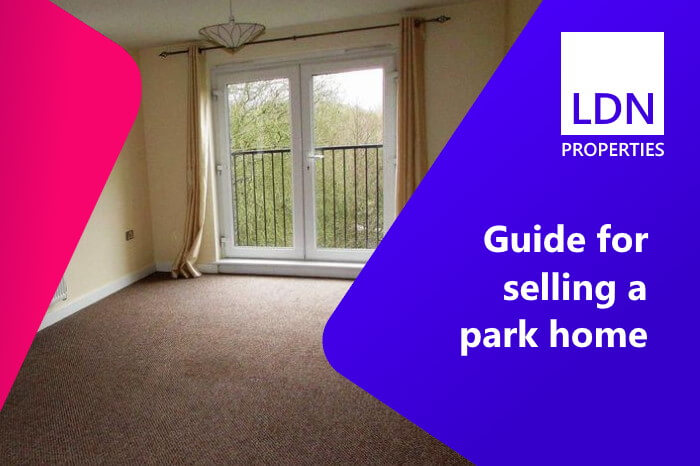
What are park homes?
Park homes are not the same as freehold or leasehold houses or flats built from brick and mortar. Instead, they are typically mobile, smaller bungalow-style homes that are often assembled in a couple of parts and then transported to be placed on a private plot of land. The park home owner pays the land owner a recurring fee to keep their home in that spot.
There are believed to be more than a quarter of a million park homes according to GoldShield throughout the UK, and because they can be transported to various locations they’re also called mobile homes.
The standard dimensions of a park home are no larger than 6.8 metres across in width, a maximum length of 20 metres and a top height from the floor to the roof of no more than 3.05 metres. When park homes are being transported from one location to another, it must be possible to disassemble them into just a few parts, otherwise it’s not defined as a park home.
If you buy a park home, you will have the legal ownership of the structure itself, however you will have zero rights to the private land on which you keep the mobile property. Sometimes, local authorities own land on which park homes sit, and you would likewise pay them for the space. This fee is usually paid weekly or monthly, and in some situations can be paid annually.
The average park home is built with a steel chassis and a timber frame, so they are able to withstand all types of weather. Once the property has been placed in location, it will then be connected to utilities through service lines that provide electricity, drainage and more.
Park homes that are built to a modern specification known as British Standard BS3632 have good insulation along with being very energy efficient thanks to double glazing, central heating and the latest boilers. As a result, people who own these properties can help to keep their typical utility costs relatively low, particularly compared to the costs of much larger homes.
Although most park homes have a similar bungalow-style design, they can vary widely in the number of rooms that they have – for example, you can find some park homes that have just a single bedroom with an ensuite bathroom, park homes with several bedrooms and living rooms, and even park homes that have many rooms as well as a full garage for parking a car.
Potential problems with trying to sell a park home
It can sometimes be harder to generate interest from potential buyers in a park home compared to other properties, and it’s important to understand the reasons why that can happen. Taking a read of the UK Government Mobile Homes Act 2013 may be useful when selling your park home.
Some people might have a reluctance to own a mobile home, even if the park home remains static in one location for much of the year. That’s because these people might believe that this type of property has a certain stigma as being less valuable than a conventional brick and mortar house or flat, and they may lose interest for this reason.
Another explanation for why park homes can be harder to sell is that it’s not possible to obtain a mortgage to cover the cost of buying such a property. If a buyer needs a loan in order to be able to pay for purchasing your park home, this will prevent the sale from happening. Therefore, the pool of potential buyers can be much smaller than with other properties.
One way to overcome the mortgage problem is to contact a quick property buyer like the London-based LDN Properties about selling your park home. These companies have the financial resources upfront to buy all types of properties immediately without needing to obtain a mortgage, which can help you to still get a speedy sale for your park home.
A third issue that some buyers might have is having to pay fees to the owner of the land on which the park home is either currently located or where the would-be owner hopes to move the property. The cost of paying the fee could be enough to turn some potential buyers away.
Yet another possible barrier when selling your park home is that the owner of the land on which it is situated will have to approve the prospective buyer to live at that location. This can be too stressful for some buyers and they may walk away from the sale as a result. However, you don’t have to worry about this when selling to a quick property buyer as they’ll handle this step.
Preparing your park home for sale
Park homes can often be smaller than conventional brick and mortar houses or flats, so anyone who might be interested in purchasing your property could be looking to downsize from a larger home they own.
But even if prospective buyers are aiming to purchase a smaller property than where they currently live, you should still do all you can to make your park home appear as spacious as possible as discussed on Theparkhome.net. One tip is to remove as much clutter as possible from the rooms inside the property, because this will help to make your home look much larger.
You should also spend some time tidying up the exterior of your park home, which can include simple tasks like mowing any grass, or repairing chipped paint or broken windows. These relatively low-cost or cost-free steps don’t require much effort, but can help to increase the perceived value of your home in the eyes of buyers compared to one with a messy exterior.
Another option for increasing the potential sale price of your property and generating more interest in it would be to install all-new appliances and other fixtures and fittings in the park home’s bathroom, kitchen, or both rooms. However, this is not a required step, and it’s also not something that many people will be able to do due to time, money and effort constraints.
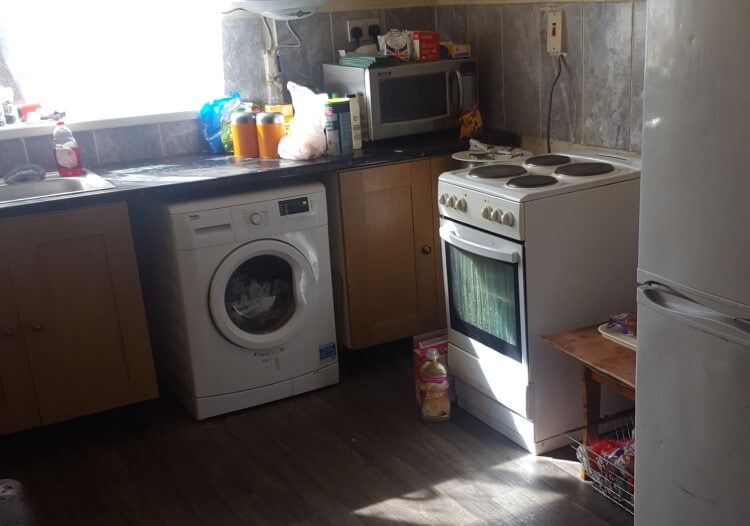
Will you have to pay tax when selling your park home?
Capital Gains Tax is a fee you might have to pay the UK government whenever you sell an asset, which is a tangible valuable item that includes houses, cars, and more.
Park homes are just like any other type of property in that you might have to pay Capital Gains Tax when selling them, although this will depend on your individual situation. There are a number of ways that you can either avoid paying this tax altogether, or significantly reduce the amount that you owe, and you should ask a financial professional to explain these in detail.
Options to find a buyer for your park home
Once you are ready to sell your park home, you will then have to make a decision on which strategy you want to use for finding a buyer. Typically, the choices will be selling through an estate agent, selling at a property auction, selling to a fast home buyer, or selling on your own.
There are clear advantages associated with all four options, but there are also some rather important disadvantages linked with a few of the methods that you should know about, for example taking many months to sell, or requiring that you pay a high rate of commission.
To find the approach that best fits your individual situation, write down a budget for the sale of your park home that includes the most important details such as how much time, money and effort you are willing to put in to the work of finding a buyer, and your ideal sale price. Compare that information against the details of the four choices below to identify the ideal method.
Selling through an estate agent
Selling your home via an estate agent will not require much effort from you, because they will handle most of the key tasks. The estate agent will prepare a listing that features photographs of your park home and describes it, advertise this listing in local media, their office and online, organise viewings where they give potential buyers a tour of the inside and outside of the property, and field offers from buyers, hopefully taking one through to exchange of contracts.
In exchange for all of this work, you can expect estate agents to charge you commission as a percentage of the final sale price of your park home. This fee is taken out of the sale proceeds right away, which will add to your overall costs with selling.
It can also take quite a long time to find a buyer when selling through an estate agent, and you should be prepared to wait for up to a full year or longer before you receive a serious offer.
You should be aware that some estate agents might try a sneaky trick of quoting an elevated sale price for your park home, despite them secretly understanding that you’ll only be able to attract buyers at a much lower price. The reason estate agents do this is to try and convince you to let them sell your property, so that they can profit from charging commission if they succeed.
It’s relatively easy to avoid falling for this trick, starting by asking multiple estate agents to give you free sale price quotes for your park home. Next, visit property sales websites like Rightmove and Zoopla, and make a note of the current and past sale prices of park homes that are similar to yours. Finally, calculate the average of all these values, and that should produce a much more reliable estimate of your home’s best sale price. Just remember it is a guide price and not a firm statement of what your property is worth.
Park homes are seen as a more specialist property and many estate agents might have zero experienced with selling them, which implies that they could struggle to generate interest from buyers in your home. Always ask individual estate agents if they have successfully sold park homes in the past, and avoid using those companies that have never been able to do so.
Selling at a property auction
Selling your park home at an auction comes with some uncertainty, because the final sale price is impossible to predict. You may get zero bids on your home, which means it won’t sell, and you’ll have to go through the time-consuming process of finding another way to seek a buyer.
Or you could just get a single bid at the reserve price, which is the cheapest value at which you are willing to sell your property. You must ensure that you select a reserve price that works for you, even after subtracting the auctioneer’s fees, because a reserve price bid is a binding sale contract and the winning bidder could sue you to enforce it.
You may be asked to choose between the traditional or modern method of auctioning for your park home. Using the traditional method, a listing will be created for your property and advertised for a set number of weeks or months to drum up interest from buyers, and then the auction occurs for a very brief amount of time on a specific day, with the highest bid at the end of the auction deemed the winner. Using the modern method, your listing will be active for several weeks or longer, and people can place bids on your home 24 hours a day, seven days a week, with the winning buyer being the top bid at the time that the listing eventually ends.
Auctioneers usually charge commission often based on the sale price you’re able to get for a property. This fee will be deducted immediately from the sale proceeds, which is another cost that you’ll have to account for if you try to sell your park home using this method. That’s far from a great outcome if your main goal with selling is keeping your costs limited.
You can ask individual auctioneers whether they might be willing to reduce their commission rate, or to make the winning high bidder pay some of your fees, as this is sometimes possible.
Using a property auction will take at least several months from beginning to end. There will be a wait of many weeks between when you list your home for sale initially and when the auction takes place. And if your property does sell, the winning top bidder will then have an average of 28 days to finalise all of their paperwork and other steps to complete the purchase.
Check with individual auctioneers to find out if they have ever managed to sell a park home in the past. If they have no experience with selling your type of property, that’s a sign that they might not know how to get bidders interested in your park home on the day of the auction. Most auctioneers should be willing to share their past auction successes and failures with you.
Selling to a fast home buyer
Fast home buying companies make quick and competitively priced offers for buying almost any type of property, regardless of its age, condition, shape or size, including park homes and much more.
LDN Properties, for example, has been buying homes since 2003 and has considered a long and ever-growing list of properties that includes park homes, flats with cladding, houses located next to railway lines, properties with an infestation of Japanese knotweed in the garden, holiday lets, penthouse flats, houses that are close to power lines, homes without planning permission, listed buildings, vandalised properties, plots of land, lock-up garages, hotels, houses where the owner has misplaced important documents such as the title deeds, and other scenarios.
These companies are called fast buyers because they have the financial ability to purchase properties immediately, without having to wait for weeks or months to initially get approved for a loan to cover the cost of buying your park home. This shortens the typical timeline for selling your property to a fast buyer to just a few weeks, and that includes exchanging contracts.
And the reputable quick home buying companies will never make you pay any commission for selling your property, which can help to keep your costs down. Instead, you will be guaranteed a streamlined and no-hassle sale where you will get to keep all of the sale proceeds.
Combining all of the positive aspects of using a fast buyer, it can be an ideal way to secure a competitive and fast sale for your park home through a no-hassle, straightforward process.
Selling on your own
When you attempt to sell a park home solo, this means you will have the duty to do all of the work involved with trying to find a buyer. This includes developing and advertising a listing, organising and leading viewings, and overseeing any offers ideally through to completion.
It’s a huge amount of potentially stressful work, even for people with experience selling properties. That’s why you should only pursue this method if you have successfully sold a park home in the past, or have a knowledgeable friend or family member willing to help for free. Otherwise you risk spending a lot of time, effort and money for a very difficult process.
You’ll find that this is often the slowest of the four options for finding a buyer, and it might be more than an entire year before you’re able to see an offer through to exchanging contracts. That’s not a good fit for any owners who are trying to sell their homes as fast as possible.
The only easily identifiable advantage of selling on your own is not having to a pay an estate agent or auctioneer any fees for finding a buyer for your park home. However, you can achieve the same positive result but with zero stress by instead contacting a no-fee quick property buyer, because they’ll make a fast and fair offer for your home without charging commission.
Top queries and answers about selling a park home
Property owners wanting to sell their home fast sometimes have questions for us, ranging from can a property sell when service charges are high through to selling a home in need of works. Here are seven of the key questions we’re asked about selling a park home:
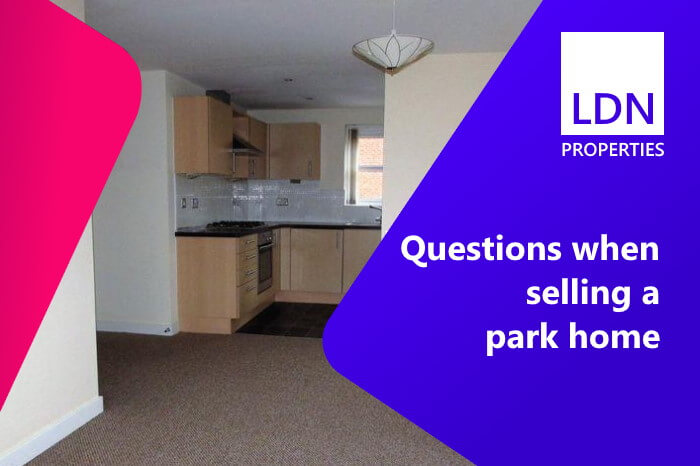
Your top questions when selling a park home
It depends on your unique situation. Capital Gains Tax usually applies to the profit that you make from the sale of a home, not the overall larger sale price. But there are many exceptions and waivers from having to pay this tax, so you should ask a financial professional for their advice.