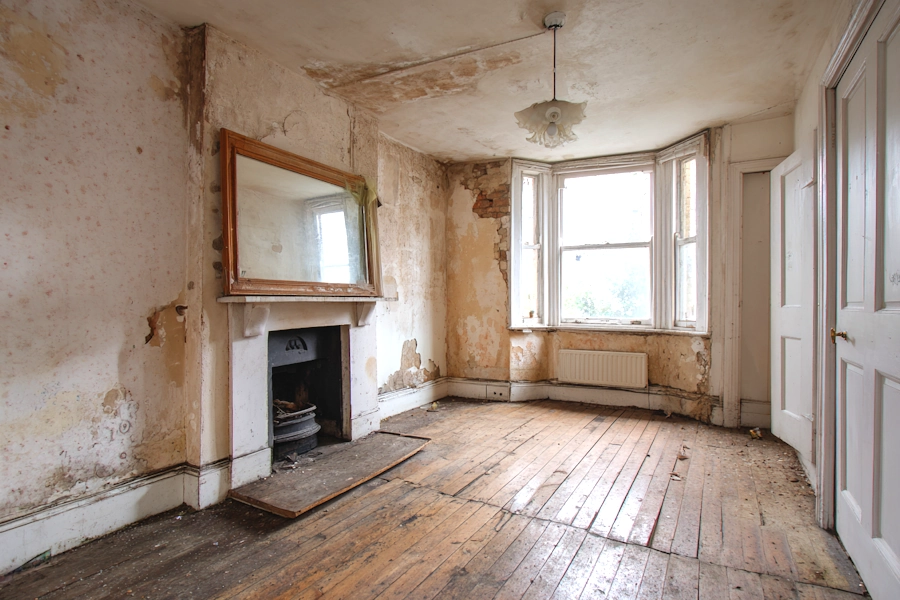
You Are Not Alone: The Scale of the Issue
One of the first things it helps to understand is just how common this situation is. Around one in seven homes in England has some level of disrepair, and the figure is not static. Properties age, become vacant, fall into further disrepair, and eventually return to the market. It is a continuous cycle, and sellers dealing with properties in poor condition are a normal and significant part of the housing market.
The latest government data paints a clear picture. Around 4 million occupied dwellings fail to meet the Decent Homes Standard, with failures linked to disrepair, poor heating and insulation, or the absence of modern facilities. A further 2.3 million homes contain Category 1 hazards – serious health and safety risks including structural problems, damp and mould, or unsafe electrics. Damp alone affects 1.4 million properties.
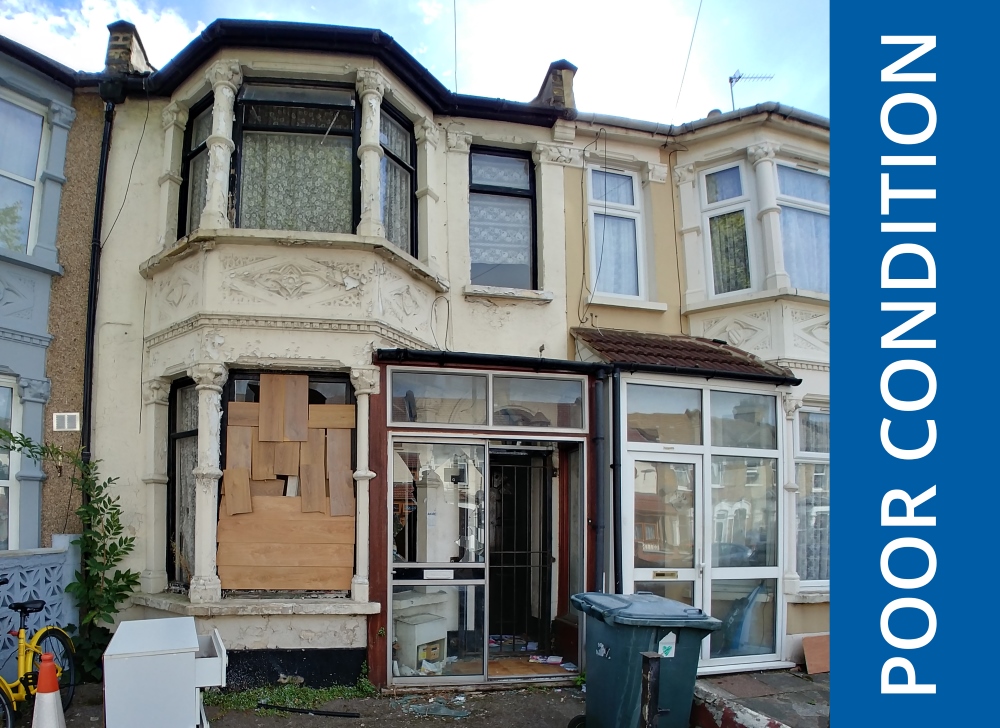
In addition to occupied homes, England has a significant number of long-term empty properties. According to data from Action on Empty Homes analysing government council tax records, there are around 265,000 homes that have been vacant for more than six months. When shorter-term vacancies and second homes not in residential use are included, the total rises to close to one million. Many of these are empty precisely because they require repair or refurbishment before they can be used or sold.
The typical seller in this situation is one of the following:
- A long-term owner-occupier who has not been able to afford improvements over the years
- An elderly homeowner who has prioritised other things over renovation
- A landlord selling a worn or damaged rental property
- An executor or beneficiary handling an inherited or probate home
Whichever category you fall into, the key questions are the same: what is the property worth, what are your options, and what is the best route to sale?
What Counts as ‘In Need of Repair’?
The phrase covers a very wide range of conditions, from properties that simply need updating to those that are effectively uninhabitable. Understanding where your property sits on this spectrum matters, because it directly affects who your buyers are, how the property is valued, and which selling route is most practical.
A useful way to think about it is as a spectrum:
As you move down that list, the pool of potential buyers shrinks. Mortgageable properties attract the widest range of buyers. Most lenders require a property to be structurally sound, weatherproof, and have a functioning kitchen and bathroom. Where these criteria are not met, buyers are usually limited to cash purchases or specialist lending, which reduces demand and puts downward pressure on price.
Common Types of Issues
Structural problems are among the most serious and include subsidence, cracked or failing foundations, roof damage, and significant movement within the building. These issues are typically flagged during surveys and often lead to renegotiation or buyer withdrawal.
Damp and mould are extremely common, particularly in older properties and those that have been left empty. Rising damp, penetrating damp, and condensation problems can signal issues with ventilation, insulation, or structural integrity, and may raise concerns for both buyers and lenders.
Outdated or unsafe systems – including old electrical wiring, failing plumbing, inefficient heating, or the presence of asbestos – may require significant investment to bring up to modern standards, even if the property is otherwise habitable.
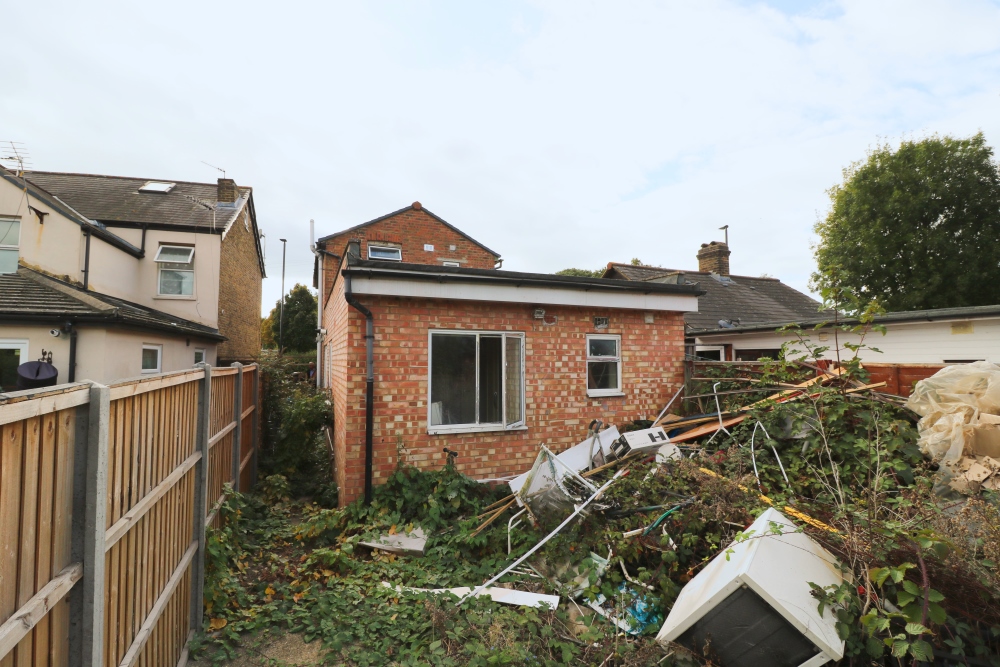
Properties damaged by tenants, affected by fire or flooding, or left derelict after long periods of vacancy make up a significant proportion of the distressed property market. So do properties with Japanese knotweed, which can affect mortgage availability and require specialist treatment before many buyers will consider proceeding.
The Stacking Effect
Many properties in need of repair have more than one issue. A flat that requires refurbishment, has a short lease, and carries a significant service charge is a very different proposition from one with only cosmetic problems. The more issues that stack up, the narrower the buyer pool becomes, and the greater the combined impact on value.
How Condition Affects Property Value
This is usually the question sellers want answered first. The honest answer is that there is no single rule, but there are consistent patterns across the market, and understanding them will help you set realistic expectations.
Buyers Do Not Simply Deduct the Cost of Repairs
A common misconception is that a buyer will take the market value and subtract the repair cost. In practice, buyers factor in considerably more than that. They price in the cost of works, a contingency for unknown or unexpected issues, the time and effort involved in managing a project, and – in the case of investors and developers – a profit margin that makes the purchase viable.
This is why a property needing £30,000 of work may sell for £40,000 to £60,000 below its fully refurbished value. The discount reflects risk and effort as well as the direct cost of repairs.
Typical Discount Ranges
While every property is different, the following ranges reflect broadly consistent market patterns:
It is worth noting that sellers sometimes underestimate the impact of issues – and sometimes overestimate it. A property in a highly desirable location may attract competitive interest even in poor condition, because buyers prioritise location above condition. The same issues in a weaker location may depress value further.
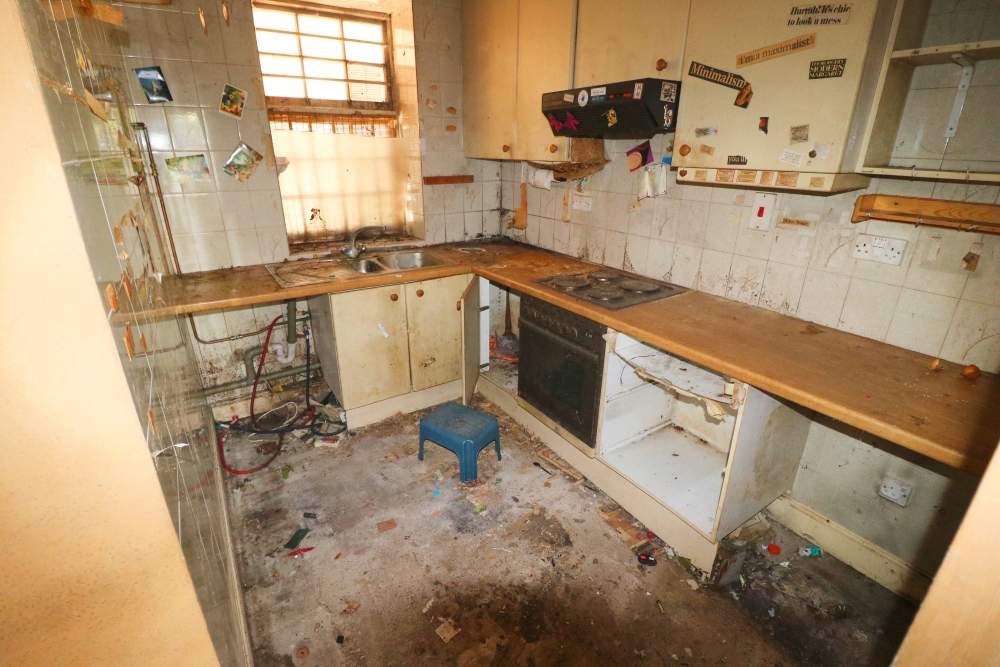
In London specifically, leasehold flats often experience greater discounts than houses, due to the additional layers of risk around service charges, major works, lease length, and building safety. It is common to see houses discounted by around 10% to 20%, while flats may be discounted by 15% to 30% or more.
The Role of Surveys
Even when a price is agreed, the survey stage can change the outcome. Surveys frequently uncover issues that were not fully appreciated during viewings, and it is common for buyers to renegotiate or, in some cases, withdraw. According to the HomeOwners Alliance, around 30% of buyers who commission a survey take some action as a result – whether that is renegotiating the price, requesting repairs, or withdrawing from the purchase. For properties in poor condition, this risk is higher than average.
Tax Considerations
It is also worth considering your tax position before proceeding. The proceeds from selling a property that is not your main residence may be subject to Capital Gains Tax, and the timing of a sale can affect your liability. It is advisable to speak with a tax adviser before completing a sale.
Should You Carry Out Repairs Before Selling?
This is one of the most important decisions sellers face, and there is no single right answer. The case for repairing before selling is intuitive – a better-presented property should attract more buyers and achieve a higher price. In practice, it is more complicated than that.
The Potential Benefits
Making the property mortgageable can significantly expand the buyer pool. If relatively modest work – installing a basic kitchen, repairing a roof, or addressing a serious damp issue – brings the property within reach of buyers using mortgage finance, this can generate more competition and improve the final price.
Even below that threshold, presentation matters. A property that is clean, cleared, and free of obvious hazards will almost always perform better than one that appears neglected or difficult to assess. Buyers are making an emotional as well as a financial decision, and a property that feels cared for is easier to visualise as a home. Small, practical improvements – clearing clutter, cleaning throughout, and carrying out minor cosmetic repairs – can reduce negotiation and improve the quality of offers without requiring significant investment.
The Risks of Renovating
The financial risks of a full renovation are significant and often underestimated. Projects regularly run over budget, particularly when hidden issues are uncovered during the works. Costs that seemed manageable at the outset can escalate quickly.
There is also no guarantee that money spent on renovation will be fully reflected in the sale price. Buyers will still conduct their own assessments, and their preferences or concerns may mean they value the improvements differently from what you would expect. The risk of over-improving is real, particularly in areas where demand is driven by location rather than condition, or where buyers would have chosen different finishes.
Renovation also takes time, during which you continue to incur holding costs – mortgage payments, council tax, utilities, and service charges – and the property remains unsold. If the market moves against you during this period, the financial case for renovating can weaken considerably.
The Cost of Doing Nothing
It is important to recognise that holding onto a property that needs repair is not a neutral option. Empty or underheated properties deteriorate over time. Damp can develop or worsen, and cosmetic issues can deepen into structural ones. Vacant properties are also more vulnerable to break-ins, vandalism, and squatting, which can create complications with insurance and reduce value further.
In many cases, sellers find that the longer they hold, the more expensive the eventual sale becomes. Sometimes the most cost-effective decision is to sell sooner, even at a slightly lower price, rather than delay in the hope of achieving more.
What About Grants?
There are limited forms of financial support available to some sellers. Disabled Facilities Grants are means-tested and aimed at adapting properties for occupants with disabilities. Local authority improvement schemes exist in some areas but are similarly restricted in scope and availability. Energy efficiency schemes such as ECO4 may provide partial assistance with insulation or heating upgrades, but these are not renovation schemes and are unlikely to cover the type of work most distressed properties require.
Legal Considerations When Selling
Selling a property in poor condition does not change the fundamental legal process, but it does raise the stakes around transparency and disclosure. Getting this right is important.
The TA6 Form
All sellers in England and Wales are required to complete the TA6 Property Information Form, which asks detailed questions about the condition of the property, any known defects, disputes, and other relevant matters. It is essential that this form is completed honestly. Failing to disclose known issues – or making misleading statements or omissions – can expose you to legal claims after the sale is complete under the Misrepresentation Act 1967.
Always appoint an experienced solicitor early in the process. They will guide you through your disclosure obligations and help ensure the sale proceeds without complications.
Key Legislation to Be Aware Of
- The Homes (Fitness for Human Habitation) Act 2018 applies to landlords and requires rented properties to be safe and free from serious hazards. If you are selling a tenanted property, this is relevant to your obligations as a landlord up to the point of sale.
- The Building Safety Act 2022 is particularly relevant for flats, especially those affected by cladding or fire safety concerns. If your property falls within the scope of this legislation, it is important to understand your obligations before proceeding.
- An Energy Performance Certificate (EPC) is required when selling any property and must be in place before the property is marketed.
- Material information rules, introduced through the National Trading Standards estate agency guidance, require estate agents and sellers to disclose certain information upfront, including known structural issues and other material facts.
Selling an Inherited or Probate Property
A significant proportion of properties in need of repair come to market through inheritance, and these cases often involve a distinct set of challenges that are worth understanding.
Practical Challenges
Executors frequently have limited knowledge of the property, particularly if the deceased had lived there for many years and had not updated it for some time. The TA6 form includes questions that may be difficult to answer with certainty, and it is entirely legitimate to respond to a number of these as ‘not known to the seller’ where that is genuinely the case. However, any issues that are known must be disclosed.
The property may contain belongings that need to be cleared before marketing, though it is worth noting that many buyers – including direct cash buyers – will proceed without requiring the property to be cleared. This can be a significant relief for executors managing an estate while also dealing with bereavement.
Emotional Considerations
Long-term family properties carry emotional weight that can affect decision-making. It is common for executors or beneficiaries to feel attached to a property, or to feel a responsibility to achieve the best possible price for the estate. These are entirely understandable feelings. It is also worth being realistic that emotional attachment can sometimes lead to overpricing or delay, both of which can work against the estate’s interests in the longer term.
Leasehold Probate Properties
Leasehold properties in probate can be particularly complex. Situations can arise where ground rent and service charges have not been paid, where the freeholder is untraceable, or where the management structure is unclear. These are not insurmountable problems, but they require careful handling and specialist legal advice. A buyer experienced in these situations – whether at auction or through a direct purchase – will be better placed to deal with these issues than a standard residential buyer.
Probate and Timing
In most cases, probate needs to have been granted before contracts can be exchanged on a sale, though marketing can begin beforehand. Confirming the timeline with your solicitor early in the process avoids delays later.
Your Selling Options
When selling a property in need of repair, the choice of selling method has a significant impact on the outcome. Each route involves a different balance of price, speed, and certainty – and for properties in poor condition, certainty is often more valuable than sellers initially expect.
Location Matters More Than You Might Think
Before comparing routes, it is worth understanding how location affects your position. A property in poor condition in a strong or desirable area can attract significant interest, because buyers focus on what the location offers rather than what the property currently is. The same property in a weaker market may struggle. Knowing your demand profile will help you judge which route is most likely to succeed.
Estate Agent – Open Market Sale
Selling through an estate agent provides access to the widest pool of buyers and, in theory, the best opportunity to achieve a strong price. In practice, properties in need of repair face particular challenges on the open market.
Buyers who are initially enthusiastic – particularly those who see themselves as capable of taking on a project – can lose confidence once surveys are completed and the full extent of work becomes clear. This leads to a higher rate of renegotiation and fall-throughs than for standard properties. If a sale falls through and the property returns to the market, future buyers may question why, which can reduce confidence and lead to lower offers. This is sometimes referred to as the ‘second buyer problem’.
Sellers going this route should be prepared for a longer process, a higher likelihood of survey-related price reductions, and the real possibility of having to restart the sale more than once.
Auction
Auction can be an effective route for distressed properties, particularly those requiring significant work. Once the hammer falls, the sale is legally binding, removing much of the uncertainty associated with private treaty sales. There is no opportunity for buyer remorse after the event.
Auction is also well suited to finding the true market value of a property through competitive bidding. In some cases, particularly where there is strong investor demand, this can lead to a better outcome than the seller expected. However, buyers often factor uncertainty into their bids – offering conservatively ‘just in case’ – and there is no guarantee the reserve price will be met. There may also be upfront costs, including legal pack preparation and entry fees, regardless of whether the property sells.
Quick Sale Companies – What to Check
There are many companies that offer to buy properties quickly, but standards and practices vary considerably. Before proceeding with any company in this space, it is worth checking the following:
- Whether the company is registered with The Property Ombudsman
- Whether the initial offer is genuinely what you will receive at completion, or whether a reduction is applied later in the process
- Whether any fees are payable by the seller, including legal costs
- Whether there is a tie-in period during which you cannot market the property elsewhere
- Whether the company is using its own funds or acting as a middleman introducing your property to a third-party investor
A reputable company in this space will be transparent about all of these points from the outset.
Selling Direct to a Cash Buyer
Selling directly to a genuine cash buyer is typically the fastest and most predictable route, because no mortgage is involved; there are no lender conditions, no valuation delays, and no risk of the finance falling through. The sale is not dependent on a chain, and the timeline is largely within the seller’s control.
LDN Properties is a London-based cash buyer covering England and Wales. We buy properties in any condition – including those requiring major work, probate properties, and leasehold flats with complications. We offer a straightforward process: you provide details about the property, we make a clear cash offer with no obligation to proceed, and you choose a completion timeline that works for you. There are no estate agent fees, no repair requirements, and no surprises on price.
For sellers dealing with complex or distressed properties – particularly those where speed and certainty matter as much as price – this is often the most practical option.
FAQ’s
1. What does “sold as seen” mean when selling a property?
“Sold as seen” means the buyer accepts the property in its current condition, without the seller being required to carry out any repairs or improvements before completion. It does not, however, remove the seller’s legal obligation to disclose known defects on the TA6 Property Information Form. Buyers purchasing a property sold as seen are expected to carry out their own due diligence, including commissioning a survey, before exchanging contracts.
2. How do I find a buyer for a property that needs a lot of work?
The most reliable routes are property auction, where investors and developers actively look for projects, and direct sale to a cash buyer. Listing on the open market through an estate agent can work, but requires careful targeting towards the right buyer type – investors, developers, and experienced renovators rather than those looking for a move-in ready home. Presenting the property honestly, with clear information about its condition and potential, tends to attract more suitable buyers than vague or over-optimistic descriptions.
3. Should I get a survey done on my own property before selling?
A pre-sale survey is not a legal requirement, but it can be a practical advantage. It gives you a clear picture of the property’s condition before you go to market, allows you to price more accurately, and reduces the risk of surprises during a buyer’s survey leading to renegotiation or a fall-through. For properties in significant disrepair, knowing the full extent of the issues upfront helps you choose the right selling route and set realistic expectations.
4. Can I sell a house with an old or unsafe electrical system?
Yes. An outdated or unsafe electrical system does not prevent a sale, but it will affect the buyer pool. Properties with wiring that does not meet current standards – such as older rubber-insulated or aluminium wiring – may be flagged during a survey, and some mortgage lenders may require evidence of remediation before they will lend. This typically means the property is better suited to a cash buyer or investor who can factor the cost of upgrading the system into their offer.
5. Can I sell a property in need of repair without an estate agent?
Yes. Sellers are not required to use an estate agent. The most common alternatives are selling at auction, where the auctioneer handles the marketing and sale process, or selling directly to a cash buyer, which removes the need for any agent involvement entirely. A direct sale avoids estate agent fees, which typically range from 1% to 3% of the sale price, and can be significantly faster than a traditional open market sale.
6. Do I have to disclose repair issues when selling?
Yes. Sellers in England and Wales must complete the TA6 Property Information Form, which requires disclosure of known defects and issues. Failing to disclose known problems can leave you open to legal claims after completion. Where you genuinely do not know the answer to a question – as is common with inherited properties – you can state this on the form.
7. Does a property in need of repair take longer to sell?
It often does, particularly on the open market. Properties in poor condition are more likely to deter buyers who require mortgage finance, more likely to generate survey-related complications, and more vulnerable to fall-throughs. A sale that begins well can stall when the full extent of work becomes apparent. Selling at auction or directly to a cash buyer removes many of these delays, and in the case of a direct sale, completion can sometimes be achieved within a matter of weeks.
8. How much less will I get for a property in poor condition?
It depends on the severity and type of the issues. As a general guide, cosmetic and minor repairs may result in a 5% to 15% reduction, while major structural issues or unmortgageable properties can see discounts of 20% to 40% or more. Buyers factor in not just the repair cost but the risk, time, and effort involved. Selling to a cash buyer involves an additional discount in exchange for speed and certainty, though the absence of estate agent fees and repair costs can offset some of this.
9. What is the difference between a doer-upper and an unmortgageable property?
A doer-upper is a property that needs work but is still habitable and mortgageable – meaning most lenders will consider lending on it. These properties appeal to a wide range of buyers, including those using standard residential mortgages. An unmortgageable property fails to meet the minimum standards most lenders require, typically because it lacks a functioning kitchen or bathroom, has severe structural damage, or is considered uninhabitable. Unmortgageable properties are generally limited to cash buyers, investors, or those using specialist bridging finance, which significantly reduces demand and affects pricing accordingly.
10. What happens if a buyer pulls out after a survey?
If contracts have not yet been exchanged, either party can withdraw without legal penalty, though costs already incurred – such as survey fees and conveyancing work – are unlikely to be recovered. For sellers of properties in poor condition, buyer withdrawal after a survey is a real risk. The buyer may renegotiate the price based on survey findings, request repairs, or walk away entirely. If the sale falls through, the property returns to the market, which can reduce future buyer confidence. This is one of the reasons many sellers of distressed properties prefer the certainty of an auction or a direct cash sale.
11. Is it worth renovating before selling or selling as-is?
It depends on the scale of the work, your financial position, and your timeline. Light cosmetic improvements – cleaning, clearing, and minor repairs – are usually worth doing as they improve presentation and reduce negotiation. A full renovation carries more risk: costs regularly overrun, there is no guarantee the investment will be fully reflected in the sale price, and the time spent renovating delays the sale. For sellers who need a straightforward transaction, or where the property requires major structural work, selling as-is to a cash buyer is often the more practical and less costly route overall.
12. What repairs add the most value before selling?
For properties in need of repair, the improvements with the best return tend to be practical rather than cosmetic. Ensuring the property is mortgageable – by installing a basic kitchen or bathroom if one is missing, or repairing a failing roof – can significantly expand the buyer pool and improve the final price. Beyond that, cleaning and clearing the property, addressing damp where it is visible and obvious, and fixing any safety hazards tend to have a disproportionate impact on buyer perception relative to their cost. High-spec finishes and full refurbishments rarely return their full cost in the sale price.
13. How do I price a property that needs significant work?
Start with an honest assessment of what the property would be worth in fully refurbished condition, then work backwards. Buyers will typically deduct not just the cost of repairs, but a contingency for unknown issues, the time and effort involved in managing the works, and – in the case of investors – a profit margin. This means the discount applied is usually greater than the repair cost alone. Obtaining a valuation from an agent experienced in distressed properties, or getting indicative offers from investors and cash buyers, will give you a realistic picture of what the property will achieve in its current condition.
14. Do I need to clear the property before selling?
Not necessarily. Many cash buyers, including LDN Properties, will purchase a property with contents remaining. If selling through an estate agent or at auction, clearing and presenting the property well generally improves the outcome.
15. What is the fastest way to sell a house that needs repairs?
Selling directly to a cash buyer is typically the fastest route, because no mortgage is required; there are no lender conditions, no survey-related renegotiations, and no chain that can collapse. Completion can often be achieved within two to four weeks, depending on the legal process. Auction is the next fastest option, with completion usually occurring around four weeks after the hammer falls. Selling through an estate agent is generally the slowest route for properties in poor condition, due to the higher risk of survey complications and fall-throughs.
How LDN Properties Can Help
LDN Properties is a London based cash property buyer covering England and Wales. We were established in 2003 and offer a professional and transparent alternative to the traditional property sale process – particularly for owners of properties that are complex, distressed, or simply do not suit the open market.
We buy properties in all conditions, including those requiring full refurbishment, properties with structural issues, ex-rental stock, probate properties, leasehold flats with complications, and empty or derelict homes.
Our process is straightforward. You tell us about the property – its condition, location, and any relevant circumstances – and we will make a clear, no-obligation cash offer. There are no fees payable by the seller, no requirement to carry out repairs, and no risk of the sale falling through due to mortgage issues or survey findings. You choose the completion timeline.
If you would like to find out what your property could achieve through a direct sale, you can contact us for a no-obligation discussion. We are happy to provide guidance even if you are not yet certain which route is right for you.
CASH BUYER
We Buy Homes in Need of Repair

TRUSTED
Rated Excellent
EXPERIENCED
Established 2003