Quick navigation
When you own a property that is deemed uninhabitable, this means the home either has a flaw or lacks something that makes it unsafe, unfit or otherwise not suitable for humans to live in it. There can be more complications involved when trying to sell this type of property, and this guide explains those barriers as well as gives tips on how to secure a fast sale.
- When are houses or flats considered to be uninhabitable?
- Mortgages for uninhabitable properties
- Disadvantages when selling an uninhabitable property
- Possible benefits to buyers when selling your uninhabitable home
- Should you renovate your uninhabitable home before selling?
- Your choices for finding a buyer when selling an uninhabitable property
- Top questions and answers about selling an uninhabitable home
When are houses or flats considered to be uninhabitable?
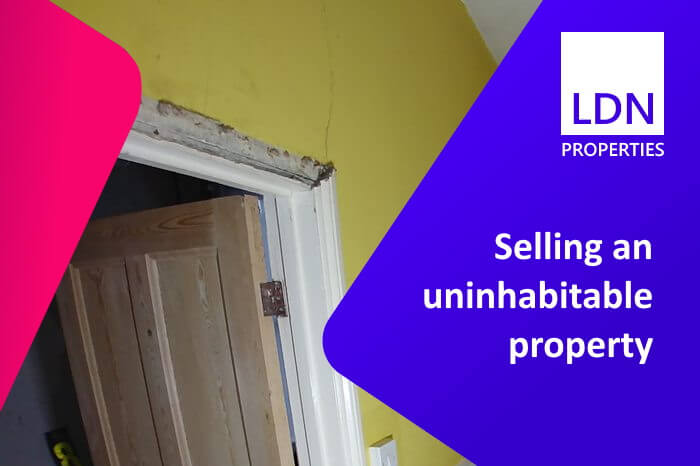
There is no one single feature of a freehold or leasehold house, flat or other type of property that will make it be deemed uninhabitable. But a simple way to think about these homes is that they are not safe or otherwise unfit for people to live for a wide range of reasons.
The UK government has attempted through legislation to clarify when a home may be considered uninhabitable. One example is a law known as the UK Government Homes (Fitness for Human Habitation) Act 2018, which took effect in March 2019 and highlights several negative features of a house, flat or other rental property that makes it no longer fit for humans to live in.
According to that law, the government will consider a property to be uninhabitable for any or all of several reasons, which include the building being in a poor condition and neglected, there are major damp problems in the home, it lacks adequate ventilation, the layout is either not stable or otherwise dangerous, the property does not have an ongoing supply of clean cold and hot water, the toilets or drains have problems, there is limited or no space to prepare and eat food, and more.
Just because a property does not have all of these elements does not mean that it qualifies as inhabitable, as just one of these issues may be enough to make it unfit for people to live in.
The list of features is not exhaustive and other issues can also make a property uninhabitable, but nevertheless it provides a working guideline by which you can assess your home, helping you to determine whether a buyer, mortgage lender or anyone else will deem it uninhabitable. This is important because of some extra hurdles that can apply trying to sell such a property.
Mortgages for uninhabitable properties
One of the biggest reasons why owners of uninhabitable properties might struggle to find a buyer is that people interested in purchasing it may not be able to get a mortgage.
The vast majority of private property buyers will need a home loan from a financial institution to cover the cost of the purchase. But mortgage lenders do not always grant loans for homebuying, especially if they have concerns about the future resale value of the property.
If someone takes out a mortgage and then falls behind on their monthly loan repayments, the lender might eventually move to repossess the property, so that they can take over ownership and then try to sell the home to recoup whatever the outstanding balance on the mortgage might be.
But a lender might be wary of issuing a home loan if they believe that the uninhabitable house or flat will be impossible to sell in the future, or difficult to sell at a value that will recover the mortgage costs.
You can avoid this particular problem by contacting a quick home buying company, such as LDN Properties, to see if they might be interested in purchasing your uninhabitable flat or house. These companies are not discouraged about making fast and fair offers to buy homes just because they might be seen negatively as problem properties by private buyers. And they are called quick buyers because they have the financial resources available to immediately purchase all types of properties, so there’s no need for them to apply for a mortgage first.
Disadvantages when selling an uninhabitable property
Beyond the overarching issue of buyers not being able to qualify for a mortgage to buy your home, there are also some more specific pros and cons of owning an uninhabitable property that might affect someone’s level of interest in your home as detailed in this Primaslaw article.
These benefits and drawbacks are vital to understand as part of the selling process, particularly if you sell through an estate agent and have many viewings where potential buyers get to visit the inside and outside of your property before deciding whether to make an offer. During these viewings, people might raise some of the negative aspects of owning your uninhabitable home, and being able to counter those concerns might help to keep someone eager to buy it.
Risky investment: Some buyers might be looking to purchase your property for cheap with the goal of spending money to renovate it. But these homes can be risky investments because there’s no promise that this outcome will occur.
Mortgage barriers: If someone is interested in purchasing your uninhabitable house or flat but needs a mortgage to cover the cost of buying the property, they might struggle to find a lender who is willing to provide the loan, which would then end the person’s ability to buy your home.
Unstable property: Depending on what’s wrong with the uninhabitable home, there’s always the danger for buyers that the building might be structurally unsound and that it would cost far too much time or money to ever return the property to the state of being able to be lived in.
Possible benefits to buyers when selling your uninhabitable home
It’s important to understand that some of the negative issues associated with uninhabitable properties could make some people no longer want to buy your house or flat and there’s nothing you’ll be able to do to change their minds before they start looking at other homes.
However, talking up the advantages of owning the home can also be a good strategy because it may convince someone to make an offer if you can overcome their initial doubts.
Good investment: Just as it can be risky to buy an uninhabitable home with the goal of renovating it, it can also be a good decision that results in generating a good return for the buyer whenever they try to sell it later.
Reduced price: Related to the concept of buying uninhabitable properties as being a possibly good investment, these homes often have to sell at a reduced price in order to generate interest from buyers, and this can make your flat or house more attractive to some buyers as a result.
Attracting developers: There are some property developers who could be looking to build new homes in your neighbourhood and need land for this, which may increase their interest in buying your flat or house so that they can demolish the building and then rebuild on the same land.
Should you renovate your uninhabitable home before selling?
It is not uncommon for properties on the market to be in need of some type of repair, whether that’s fixing some minor structural problem like minimal subsidence or replacing a bad roof.
However, if you have an uninhabitable house or flat, it likely means that there is something major wrong with the property, such as the lack of a kitchen, an unstable structure, or another type of problem that would cost a significant amount of time and money to correct. That means you’ll need to decide whether to invest in renovating the home before trying to sell it.
The benefit of investing in repair and renovation work for an uninhabitable property is that you might be able to turn it into a habitable home, which buyers will see as more valuable. This in turn means you may be able to set a higher asking price.
Otherwise, people who might be interested in purchasing your home will make an assessment of how much it would cost them to renovate the flat or house in order to make it habitable, and they will want to reduce their asking price by at least this amount. By spending money on improving the property, you may have better prospects of selling at an increased sale price.
But you should only pursue the work of repairing, renovating or otherwise improving your uninhabitable home if you can afford it.
Your choices for finding a buyer when selling an uninhabitable property
One of the most crucial decisions that you will have to make when selling your uninhabitable property is choosing which method you’d like to use for trying to find a buyer.
The typical selections are selling to a quick home buying company, selling through an estate agent, selling at a property auction, or selling on your own. As you’ll see from the details of each approach below, there are specific advantages of each, for example not having to pay anyone else fees when finding a buyer for your house or flat. But there are also some disadvantages associated with a few of the methods that you should about before making a choice.
It can be helpful to write down a budget for the sale of your uninhabitable home that notes important factors such as how much commission you might be willing to spend on the sale, how long you are prepared to wait for a sale, and various other needs and wants you may have. Compare these issues to the specifics of the four choices below, and that should hopefully make it easier for you to identify the approach to selling that best suits your situation.
Selling to a quick home buying company
One of the swiftest ways to sell your uninhabitable home is often by contacting a quick property buyer, because they can usually complete the entire process of purchasing your home within a handful of short weeks – and that includes paying you the proceeds and exchanging contracts.
Quick buyers are so called because they have the financial ability to purchase homes straight away, with no waiting for many weeks or months to initially win approval for a mortgage that will pay for the cost of the transaction. This significantly reduces the time taken to complete the purchase, and also reduces the risk of the typical quick buying purchase falling through.
A great element of using a quick home buyer is that they will be open to making competitive and speedy offers to buy any property no matter its age, condition, shape, size, or type – including uninhabitable homes or houses without FENSA certificates. That increases the prospects that you’ll be able to get a decent offer for your property even when private buyers might otherwise be discouraged from owning it.
LDN Properties, which launched in 2003, for example has a long and varied list of properties considered and purchased in London and elsewhere in the UK that not only includes uninhabitable homes but also flats with cladding, houses near airports or underneath noisy flight paths, properties located close to unsightly mobile phone masts, listed buildings, flats where the owner cannot find crucial documents such as the title deeds, houses of multiple occupancy, properties that have elevated levels of radon, homes with solar panels, and flats with noisy neighbours.
Another advantage of selling your home to a fast buyer is that the legitimate companies will never make you pay any commission for the sale of your property.
Selling through an estate agent
As an alternative to using a fast buyer, you might want to think about enlisting the help of an estate agent as shown on the Rightmove website to sell your uninhabitable home.
You won’t be required to do much, if any, work when selling this way, because it’ll be the estate agent’s responsibility to prepare a listing for your home that describes the property and features photographs of the exterior and interior, and then advertise this listing online, in local newspapers and in their office. They’ll also organise viewings for potential buyers to see your home in person, and will field offers, ideally taking a serious offer through to completion.
In exchange for all of this work, an estate agent will usually charge you commission. This fee will be subtracted from the proceeds immediately, reducing your final net sale profit.
It might also take a long time to secure a buyer for your uninhabitable home when using an estate agent, and don’t be surprised if it takes over a year to receive a genuine offer. This is often not the best match for those homeowners who want to sell their properties as speedily as possible.
Selling at a property auction
Another option for selling your uninhabitable home is using an auction, where people will hopefully place ever-increasing price bids for your property. The aim is to have a lot of interest in your house or flat, so that the final price will generate a decent sale.
Be aware that auctioneers will charge commission for their work in selling your home, which includes developing and advertising a listing for the property, along with hosting the auction and overseeing any successful winning bid through to a finalised sale. The average auctioneer fee is often based as a percentage of your home’s final auction sale price, and this commission will be deducted right away from the sale proceeds.
Ask individual auctioneers whether they might be willing to reduce their rate of commission, or if they will pass on the burden of paying some sale costs on to the winning high bidder.
This is not usually the fastest choice for selling a property, because it will take at least several months. You’ll have to wait many weeks between when you first enter your uninhabitable house or flat for sale and until the auction occurs. Then, if your home does sell at the auction, the buyer usually gets about 28 days to finalise the paperwork and other steps to complete the purchase of your property, which adds further delay to the overall selling process.
You might want to approach individual auctioneers to ask them if it may be feasible to set a shorter deadline than 28 days for the winning high bidder to finish all of their required tasks for the purchase of your home. Some companies could be willing to agree with this, however you should also know that other auctioneers may give the buyer even more time than 28 days.
Selling on your own
When you sell an uninhabitable property on your own, it will be your responsibility to create a listing, advertise is, organise viewings, and field any serious offers from potential buyers.
This is a huge amount of work and can require a lot of time and money, and therefore is not suggested for most people unless they have prior experience with successfully finding buyers for properties, or have a skilled family member or friend who may be willing to help for free. Otherwise, you risk enduring an incredibly stressful process for very little overall benefit.
It can also take a very long time to find a buyer when selling solo, and you should know that it may be more than a full year before you are able to obtain a serious offer from a buyer. This timeline can be even longer when trying to sell a non-conventional house or flat, for example with attempting to find someone to purchase a property that is considered uninhabitable.
The only obvious advantage of selling on your own is that you will not have to pay an estate agent, auctioneer or other third party any fees for selling your home.
But you can get this exact same result, and with none of the stress of selling on your own, by contacting a quick property buyer who will make a fast and competitive offer for purchasing your uninhabitable house or flat whilst also committing to not charging you any commission.
Top queries and answers about selling an uninhabitable property
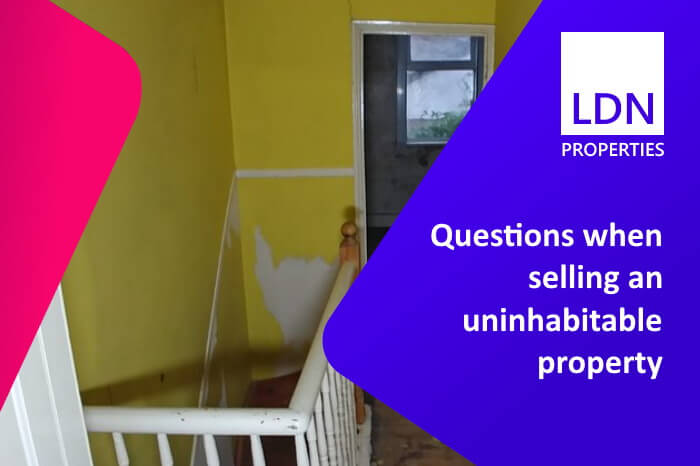
Homeowners wanting to sell their home quickly may have a handful of questions for us, ranging from the amount of repairs needed before selling through to selling a home in bad condition. Here are some of the main questions we’re often asked about selling an uninhabitable property:
Your top questions when selling an uninhabitable property
Generally, a property is considered to be uninhabitable if it has some structural problem or lacks a certain feature that makes the home effectively unsafe or otherwise unfit for people to live in. Reasons why a flat or house might be deemed to be uninhabitable can include inadequate ventilation, not having any kitchen or other place to prepare food, being unstable, and more.
Yes, there are several situations in which a buyer might see your uninhabitable house or flat as a good investment. They could plan on purchasing your property and investing in a complete renovation, and then trying to sell it at a profit in the future. Or they might be looking to demolish the home entirely and then build a brand new home on the land that will make them a profit.
One of the biggest problems with trying to a sell a house or flat that is uninhabitable is that a private buyer may not be able to qualify for a mortgage to cover the cost of purchasing the home. That’s because home loan lenders might believe that they won’t be able to recoup the cost of the mortgage if the owner defaults on the loan and the lender has to sell the property.
It depends on the condition of your property and other factors such as how much time, money and effort you are willing to spend on repairing whatever issues are currently making the flat or house uninhabitable. But generally, you are not required to repair an uninhabitable property before you attempt to sell.
The schedule for selling your uninhabitable home will vary based on which method you choose for trying to find a buyer. Selling on your own or using an estate agent are typically the slowest options because they can take more than an entire year, and an auction will often take several months at least. A fast buyer can be the speediest option as it usually takes just a few weeks.
If you use a trustworthy quick buyer to sell your property or try to find a buyer without any assistance, you won’t have to pay any fees. However, estate agents and auctioneers will usually charge commission as a percentage of your home’s sale price.
Ask individual fast property buyers if they are members of The Property Ombudsman (TPO), which is a third party organisation that writes policies designed to guard homeowners against fraud in the quick buying sector. Be wary of selling your home to a company that is unable to prove it belongs to TPO or refuses to join, because these might be scams.