Quick navigation
An increasing number of people in the UK are turning to guest houses like bed and breakfasts for their holidays, and it might be a promising time to sell such a property if you own one. This guide offers tips on steps that you can take to increase the odds of selling your guest house and doing so quickly, along with advice on how to navigate some complications with the sale.
- Which properties meet the definition of being a block of flats?
- Can you sell a block of flats if you currently have tenants?
- Potential problems trying to sell a block of flats with cladding
- Taxes you might have to pay when selling a block of flats
- Selecting the right method for selling your block of flats
- Top queries and answers about selling a block of flats
Our current purchasing criteria
We hope you find our guide to selling a block of flats helpful. Please note that LDN Properties do purchase individual flats, but we are not currently purchasing entire blocks of flats. We are happy to offer suggestions on alternative reliable routes for selling.
LDN Properties specialise in purchasing properties in need of improvement; anything from unmodernised to uninhabitable properties. We also buy short lease flats.
Which properties meet the definition of being a block of flats?
Owning a block of flats can be a valuable decision as a single investment, or as a strong component of a property portfolio that also includes other homes. As the owner of the building, you should be able to charge rent to people who would like to live in the flats as tenants, ensuring steady income for you.
However, there might come a time when you decide that you would like to sell your block of flats. Perhaps the stress of daily life as a landlord has become too much for you, and you would prefer to no longer own this or other investment properties. Or you might need the sale to raise funds for an urgent priority, such as buying your dream home or possibly moving overseas.
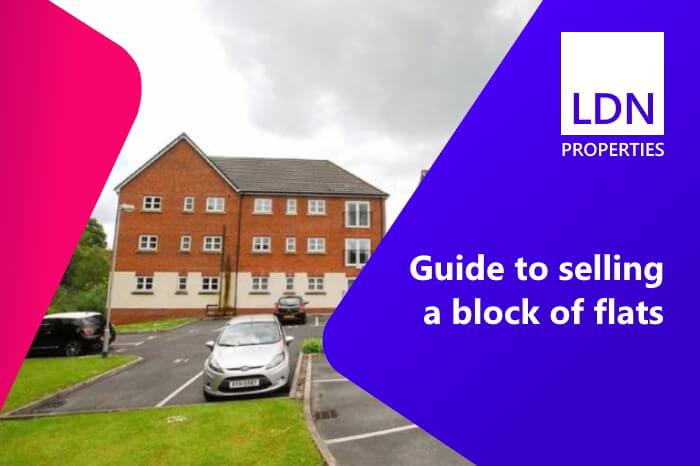
Whatever the reason for selling, it can be useful to start by defining exactly what type of property qualifies as a block of flats. This is any building of which you are the freeholder or head leaseholder that contains two or more individual properties that are rented out on a monthly, annual or other basis to tenants as flats, and the people living in those flats do not own any of the freehold. They will sign a contract with you specifying the rent they’ll pay and how long they’ll live there, usually by means of an Assured Shorthold Tenancy Agreement.
You’ll often find blocks of flats within cities, and depending on the current local property markets and demand for homes in certain areas, selling a block of flats can be profitable.
For example, Leicester City Council recently offered £5.5 million to buy a three storey block of flats in the city that it intends to convert into affordable homes, and there are many other recent similar high profile examples. With the right approach to buying, you can hopefully make a decent return on your sale.
The rest of this guide will walk you through the key points of trying to sell a block of flats, including what you need to learn about rights that any current tenants might have as part of the selling process, how cladding might affect the sale of the building, and choosing the best way to find a buyer so that you can hopefully achieve a profitable and speedy sale of the property.
Can you sell a block of flats if you currently have tenants?
Selling your block of flats is possible with existing tenants, but there are some additional complications involved that you should know about, compared to selling an empty block of flats.
Leaseholders who are currently living in your block of flats usually have what’s known as the right of refusal if you attempt to sell the building that contains their units. This situation occurs when you are the freehold owner of a block of flats and your tenants are leaseholders, and you’re required to approach them first to see whether they would like to buy the freehold of their unit.
There are many conditions and restrictions on this right of refusal, such as a requirement that more than 50 percent of the existing tenants must agree to purchase the freehold for the block of flats from you. It’s possible that you might want to consult with a legal professional for advice on whether this mandate applies to your block of flats, and whether it’s a good option.
If you are trying to sell the block of flats with existing tenants, you should take every step to ensure that they are treated well and are happy with their living situation. Tenants who enjoy living in the building are far more likely to keep it in good condition and be receptive to potential viewings where buyers would get to tour the property inside and outside. Unhappy tenants might be more inclined to reject viewings of their flats, and to leave the common areas messy, and because appearances are important to buyers, this could make the property less appealing.
Alternatively, you might want to try selling the block of flats as empty, and if that’s the case then you will need to trigger a notice clause that should be in your rental contracts with your tenants. This should specify how many days’ notice you need to give tenants before they have to leave the property, typically this is 60 days but it can be more or less time in some situations.
If there’s a problem tenant who refuses to leave and yet you want to sell the block of flats without anyone living in it, you might have to pursue what’s known as a Section 21 legal order to get them evicted. But this can be a costly and time-consuming process, and therefore you should try to avoid having to pursue this outcome unless it becomes an absolute necessity.
Potential problems trying to sell a block of flats with cladding
Another issue that you should consider when selling your block of flats is that you might face some additional hurdles shut the flat have cladding – which is a type of material used as a non-structural layer in construction to provide more insulation or protection from bad weather. Cladding is most commonly used on blocks of flats and can be external or internal.
Unfortunately, some types of cladding have been shown to be very dangerous because they are highly flammable. This was brought into the public’s awareness by the tragic Grenfell Tower fire that happened at a block flats in North Kensington, West London, in June 2017. The blaze grew quickly in size and devastation partly because of the exterior cladding used at the property. It was later found that the cladding fell short of regulatory mandates, which made the material far more likely to ignite.
The disaster brough attention to the fact that the same type of cladding is used at blocks of flats throughout the UK, and it prompted calls for strict new safety regulations on cladding. In the summer of 2022, the government banned the specific type of cladding used at Grenfell Tower, ensuring it cannot be used for any new construction of any type, in a bed to reduce future fire risks.
In addition, the government has implemented policies that require a specialist qualified surveyor to perform fire safety assessments on blocks of flats and any other buildings that have cladding. The reason why this might create a delay with the sale of your block of flats is that there’s an backlog for the limited pool of surveyors, so it may take months to get an assessment.
Without a review in place, a mortgage lender might be unwilling to give a potential buyer the loan they need to purchase your block of flats, making the sale impossible. However, don’t worry if your block of flats has cladding and you can’t wait for however long it will take to get a surveyor’s review, because you still have options for quickly selling the property.
One options is to get in touch with a fast property buying company, such as LDN Properties, who might have the financial resources available to immediately purchase the block of flats without having to wait for a cladding assessment to first take place. A later section of this guide offers more insight into how these companies work, and the benefits they can give you.
Taxes you might have to pay when selling a block of flats
As the owner of a block of flats who is looking to sell the property, there are at least two taxes that you might be liable for paying, including one that potential buyers might ask about.
Knowing your possible financial liability for these two taxes can be not only an important part of ensuring that you are able to accurately plan a budget for the sale of your block of flats, but also to be able to answer in full any queries that you might get from prospective buyers. Be sure to obtain specialist tax advice as required.
Income Tax: If you’re taking in money from the rent payments that you tenants give you, then you most likely will have to pay tax on some or all of this income. Speak with an accountant or other tax professional who can give you advice on the total amount of your tax liability. Someone who is interested in buying your block of flats and becoming a landlord will likely be very interested in knowing how much income tax they might be expected to pay in that role.
Capital Gains Tax: This will only affect you and not the buyer, because it’s a tax that applies in some cases to the profit, or gain, that you might make from the sale of the block of flats. It will usually only be charged on the amount of profit made, and not the bigger value of the overall property sale price. Always check with a financial professional when selling any type of property, because there are certain exceptions and limitations that can reduce your tax burden.
Selecting the right method for selling your block of flats
When you have decided to sell the freehold on your block of flats, the next important choice that you will have to make is deciding which of four common methods you would like to use to find a buyer for the property.
Generally, your choices are selling to a quick property buyer, selling on your own, selling through an auction, or selling using the services of an estate agent. There are noticeable pros of each approach, but as you’ll see below, some of the choices also have major drawbacks.
Whether you are selling your block of flats vacant or with existing tenants, it can be helpful to prepare a budget for the sale that covers the widest possible range of relevant information – such as how long you’re willing to wait to find a buyer, whether you want to pay any fees for selling, and the amount of profit that you would like to make. Compare these factors against the specific details of the four methods of selling below, and that should help you to find the situation that best matches your needs.
Selling to a quick property buyer
Fast buyers have this name because they’re able to make swift and competitive offers to buy homes, and usually complete the purchase of a property within a handful of weeks. That’s much speedier than the typical timeline when using any of the other methods of selling.
They’re able to move so rapidly because these companies, like the London-based LDN Properties, have the financial resources upfront to purchase properties, with no waiting for weeks or months to get approved for a mortgage that would cover the price of the sale. It’s perfect for any property owner who is looking to find a buyer on the fastest schedule feasible.
Another great advantage of using a fast home buyer is that the trustworthy companies will never make property owners pay any fees, so they’re guaranteed to receive the total proceeds from the final sale price offered.
A block of flats can also be trickier to sell via other methods, for example through an estate agent that might have no experience with finding buyers for this type of property. By contrast, quick buyers can make offers to buy almost any type, size, shape, condition or age of property.
For example, LDN Properties’ long list of purchases considered since launching in 2003 includes homes without a gas safety certificate, vandalised homes, bed and breakfast properties, houses with solar panels, mundic homes, flats suffering from dry rot, houses that have low Energy Performance Certificate grades, properties with subsidence, flats with noisy neighbours, homes located by railway lines, lock-up garages, plots of land, properties with elevated levels of radon, flats that have current tenants with many years left on their rental agreements, empty properties. and many other varied examples.
And many of these companies can buy homes almost anywhere – LDN Properties is based in London and purchases houses and flats in the city, but also in locations across the UK.
Therefore, based on the speed of selling without any fees, and the ability of quick buyers to make fair and fast offers to purchase almost any variety of property (including when selling a warehouse), this is often a popular method for owners to sell a block of flats.
Selling on your own
You’ll find that this can be a very slow and stressful way to sell your block of flats, because it’s not unheard of for some properties sold this way to remain without a buyer for over a year. Compared to using a fast buyer in particular, selling on your own is an incredibly slow process.
It’s a time-consuming approach to selling, because you will be responsible for every aspect. You will have to prepare a listing that describes the block of flats and features photographs of it, and then advertise this listing to generate interest from buyers. Next, you will have to organise viewings for potential buyers to tour the property. And finally, you’ll have the sole responsibility to hear various offers from buyers, and hopefully see one through to exchange of contracts.
This is a lot of work, and it’s not something that you can simply do in your spare time. It will require extensive time, money and effort and therefore is only suggested if you’ve got experience with selling homes, or have a skilled friend or family member willing to help for free. Otherwise it can create far too much unnecessary hassle and stress compared to other options.
The only potential benefit of selling this way would be not having to pay a third party, such as an estate agent or auctioneer, any fees, therefore protecting your profit. But you can get this exact same result and with none of the stress by selling the property to a no-fee quick buyer.
Selling using the services of an estate agent
Another way to sell is through an estate agent, who will take on the responsibility for producing a listing for the block of flats, advertising this online, in their office and in local newspapers, organising and leading any viewings, and seeing any offers through to exchanging contracts.
But they expect to receive payment for all this effort, and estate agents usually charge commission based on a property’s final sale price. This fee is deducted immediately from the sale proceeds, which means a reduced net profit for you.
Beware that some estate agents might not have any idea how to sell a block of flats, because their only experience might be finding buyers for more typical houses and other properties. Always ask individual estate agents if they have successfully sold blocks of flats in the past, because if they have not, it’s a sign they won’t know how to find a buyer for your property. And that risks your block of flats remaining unsold for many months or selling at a lower price.
Even if an estate agent does know how to sell a block of flats, the typical timeline for selling any type of property this way is at least many months, if not longer. You should look at other methods for finding a buyer if getting a speedy sale if your number one priority.
Also note that some estate agents might quote you an attractively high price for selling your block of flats, even if they secretly know that the property will only generate interest from buyers at a much lower amount. The reason for this trick is to convince you to sell the property through them, so that they can profit from the commission that they will charge for finding a buyer.
Selling through an auction
The fourth option for selling your home is an auction, which works much the same as auctions for any other item – people will hopefully place bids of ever-increasing value on your property, and whoever has the highest bid when the auction ends is the buyer of the block of flats.
Of course, there’s always the danger that nobody bids on your block of flats, or it fails to receive any bids at or above the reserve price, which is the lowest value at which you agree that the property can sell. If you don’t receive any bids then the block of flats will be deemed unsold, and then you’ll have to start over with trying to find a buyer, delaying the process by many months.
Always select a reserve price that is guaranteed to produce a profit for the sale of your property, even after subtracting the commission that the auctioneer might charge. Otherwise, you risk ending up in an unenviable situation of either breaking even on the sale or making a loss.
The timeline for selling through an auction is at least a few months, because there’s a delay of many weeks between when you first list the block of flats for sale and when the auction occurs. Then, if the property sells, the winning high bidder typically has about 28 days to complete all of their paperwork and other required steps to finalise the purchase. You might be able to negotiate with the auctioneer to set a tighter deadline for the buyer, so always ask about this.
It’s also possible that you might have the chance to ask the auctioneer to either pass some of your fees for selling on to the winning high bidder, or to lower their rate of commission.
Usually, auctioneers will make sellers pay fees charged as a percentage of the final sale price that a property achieves from the auction. This commission is taken out of the sale proceeds right away, which in turn means that you’ll have to accept a reduced net profit. Lowering the rate of the fees or having the buyer pay them can help increase your profit.
Some auctioneers might also not have any experience with selling a block of flats, because their expertise could simply be in selling conventional properties like brick houses. Always ask individual companies whether or not they have managed to sell blocks of flats in the past through an auction, as they should be willing to tell you their success rate. If they have never managed to attract a single bid for a block of flats in the past, it’s a very strong indicator that the auctioneer won’t know how to market your property or attract any interest from buyers.
Top queries and answers about selling a block of flats
Property owners wanting to sell quickly typically have a number of questions for us, ranging from selling in a poor condition through to selling with a leak. These are some of the key questions we’re asked about selling a block of flats: