
Quick navigation
Basement flats can be an attractive option to buy for a home for various reasons, but they can also have some drawbacks that might make them harder to sell than flats on higher floors. Although there can be some complications involved with trying to sell your basement flat, it won’t be impossible to secure a buyer at a decent price if you choose the right approach.
- What is a basement flat?
- The advantages and disadvantages of a basement flat
- Whether to renovate your basement flat before selling
- Reasons why it can be harder to sell a basement flat
- Steps involved with selling a basement flat
- Options for finding a buyer for your basement flat
- Top questions and answers about selling a basement flat
What is a basement flat?
Basement flats, also sometimes referred to as garden flats, are units that are below the main level of a house, block of flats or other residential structure. Some are completely below street level, others are built in such a way that they can have street-level entrances and garden access. No two basement flats are the same, some can be easy to sell and others hard to sell. Technically a basement flat is the opposite of a penthouse flat, with one being at the bottom of the building and the other being at the top.
They will be separate from the rest of the building, and typically a leasehold property, which means that someone else, known as the freeholder, owns the building and you own the flat for a set amount of time as agreed to in your lease agreement. This agreement often initially lasts for 99 years, although every flat is unique and your deal might have less or more time on it.
Basement flats can vary in size, they might be one large studio with no dividing walls except for the bathroom, or they might be split up into several rooms such as the kitchen, living room, bedroom and bathroom. There’s no hard and fast rule about the exact size or layout of a basement flat, other than its position at below ground level as part of a building. Basement flats can also be ex-council flats usually as part of a larger block.
For example, some recent news reports note that a Georgian townhouse across the street from where Kate and Peppa Middleton once lived in London is on sale for almost £7 million, and one its main features is an elaborately designed basement flat that includes a study, large bedroom and shower room. Other basement flats might be designed on a much less elaborate and far cheaper scale.
The advantages and disadvantages of a basement flat
Regardless of the shape and size of your basement flat, it can be useful to know what buyers might see as the advantages and disadvantages of owning such a property when you’re trying to sell it. This can help you to anticipate any potential concerns that prospective buyers might raise during viewings when they come to tour the home, and it can also help you to think of arguments to make in favour of owning a basement unit to help you with increasing your odds of finding a buyer for it.
A basement flat is neither a good or bad property investment, because of the several different pros and cons that come with owning this particular type of property. But having a knowledge of both can help you to understand why you might be struggling to attract interest from buyers in your basement flat compared to other types of homes that are managing to sell swiftly.
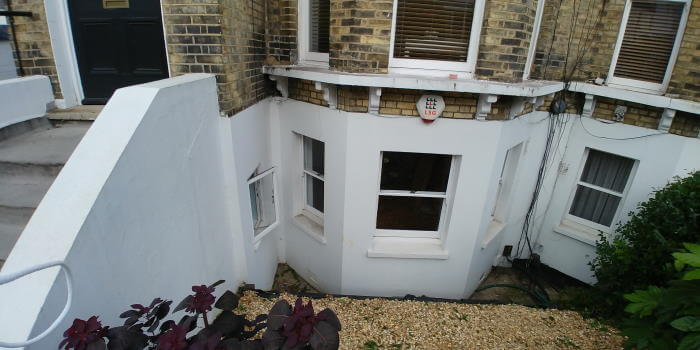
Advantages of owning a basement flat
More privacy: A basement flat often has its own entrance separate from whatever building it’s a part of, which means more privacy for you and anyone else living in the flat. This entrance might be below the front door, at the side of the building or elsewhere. And the flat itself will often by separated from the building inside, offering even more privacy from the other residents.
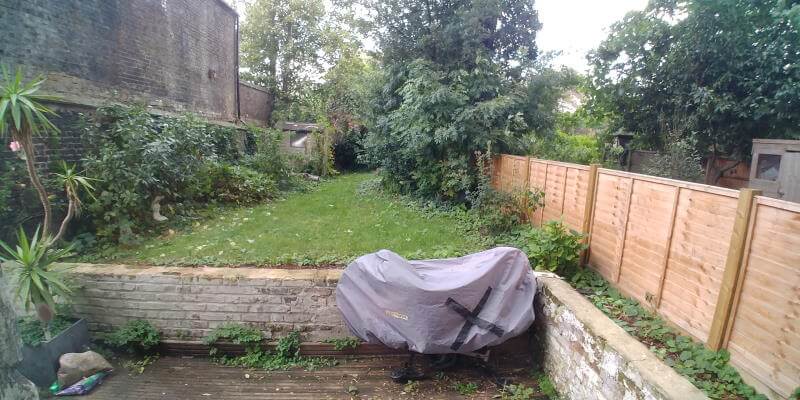
Garden access: Some basement flats also have a back door that leads out into the garden of a property, and in certain cases this access to the garden can be the sole right of the basement flat owner to enjoy. That’s a huge perk, especially for those who enjoy spending time outdoors.
No steps: Basement flats that are accessible at ground level avoid the need for having to climb any steps to get into the property, which makes them a more appealing prospect for the elderly or those who mobility problems. Because the entire unit is spread out over just one floor, you don’t have to worry about having to navigate staircases just to get around it.
More affordable: Buyers could be enticed to purchasing basement flats because they are often sold at lower prices than other units on higher floors in the same building. This is because of the potential drawbacks of owning a basement flat, but that can work to your advantage if you are able to generate more interest from buyers because of the comparatively cheaper price.
Disadvantages of owning a basement flat
Less lighting: One common criticism of basement flats is that they are much darker than above-ground properties, because there’s less potential for installing windows to let in natural light. This can sometimes give basement flats a gloomier appearance, and it can make the home harder to sell if the buyer is looking for a property with plenty of natural light.
Lower ceilings: There’s only a finite amount of space to work with when constructing a basement unit, and this can mean that the ceilings in the home are much lower than they might be higher up in the same building. For tall people or anyone who feels claustrophobic with lower ceilings, this quality can be a dealbreaker that makes them lose interest in the property.
Reduced profit: Just as the lower average price for basement flat can be an advantage by attracting more potential buyers, it can also be a disadvantage if people assume they can offer less to buy the unit compared to other properties. The lower that the sale price becomes, the closer you may get to just breaking even with the sale rather than making much profit.
Potential flooding: The closer that a property is to sea level, the greater the risk that the unit may flood during a particularly bad storm. This is especially true if the building is located within an officially designated flood zone. The risk of flooding can be enough to deter buyers fearful of the resulting damage, and it can also be enough for some financial institutions to reject a mortgage application.
Damage above: Because a basement flat is located at the very bottom of a property, it will be on the receiving end of any leaks, flooding or other water damage from the units above. If someone living in the unit immediately your flat somehow floods their property, it will seep through their floor and cause significant damage to your basement flat’s ceiling and walls.
Whether to renovate your basement flat before selling
If you have the time, money and interest in renovating your basement flat before trying to sell it, doing so might have the result of generating interest from a greater number of prospective buyers. But there are some complications with this work that you should know about first.
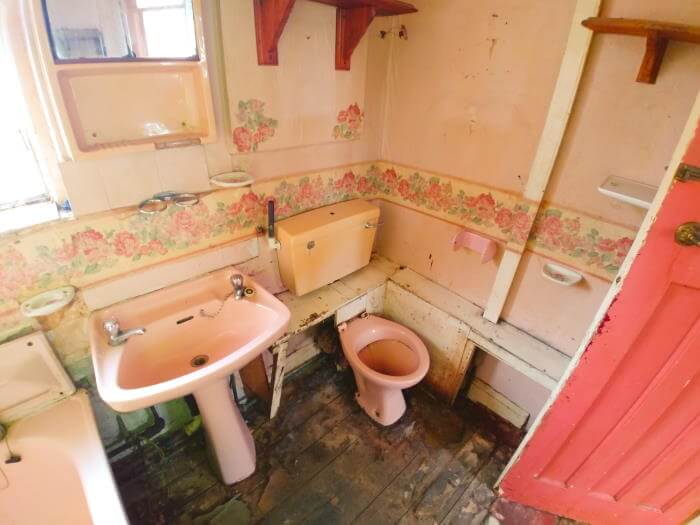
A renovation project could range from redesigning the kitchen or bathroom or a basement flat through to investing in a complete redesign of the interior and possibly even exterior. The greater the scope of the plan, the more time and money you will naturally have to spend.
Before deciding whether a renovation project is a good idea in terms of adding value for buyers to your basement flat, be honest with yourself and write down a true budget of what you can afford to spend, including how much time you can wait to complete the work. Only pursue a renovation if you can spend the resources whilst also still making a profit from the sale.
Another important factor to consider is whether you will need planning permission for renovating your basement flat. Some work, such as a relatively simple redesign of the interior, might not require you to go through the often complicated and time-consuming process of winning planning permission. But other work can require planning permission, such as renovations that require structural change to the property or work on the exterior, according to the HomeOwners Alliance, a third party organisation that property owners and their rights.
Reasons why it can be harder to sell a basement flat
The possible disadvantages of owning a basement flat also help to offer some insight into why it can be harder to sell such a home in contrast to above-ground properties.
Buyers might be deterred from the idea of owning a basement flat simply because they accept the stereotype of the homes being dark and prone to damp, as the mortgage advisor Teito explains. If you’re dealing with buyers who insist on a minimum number of windows to provide natural light and there’s nothing you can do to install extra windows in your basement unit, you’ll have a harder time selling.
Another reason why it can be harder to sell a basement flat is that buyers might be concerned about the potential for future damage that is increased because of the unit’s position. Basement flats are naturally at increased risk of damp or leaks from the units above them in the same building, and they can be more susceptible to mould than parts of the property located higher up. They are also the first part of the building that will flood in the event of a major storm with flash floods.
Even though your basement flat might never have suffered any such damage, a potential buyer might be thinking about the possibility that such problems could arise in the future and decide that, even at a reduced price, they do not want to deal with that hassle once they own the unit.
Steps involved with selling a basement flat
Similar to maisonette flats, the vast majority of basement flats will be leasehold properties, which means that you own the unit for a set amount of time through an agreement with the freeholder who owns the land on which it sits. As a result, when you decide to sell your basement flat you will be selling your leasehold on the unit and not trying to find a buyer for the entire building.
Selling a leasehold property can be somewhat more complicated than selling a freehold property, but it’s still fairly straightforward. Your first step is to find out the amount of time left on your leasehold agreement, because buyers prefer agreements that have more time on them compared to less.
It’s also important that you understand all of the terms and requirements of your leasehold agreement, because whoever buys your home will also have to adhere to these and either they or their solicitor will likely ask you about them if they’re interested in purchasing your flat. This is known as “assignment” of the leasehold agreement responsibilities to the buyer, and almost all leasehold agreements have clauses that detail exactly how this process should work. If your flat is tenanted, you will have to also decide if you are selling with tenants remaining or with vacant possession.
There are a number of other important aspects to deal with, including finding out whether there are any restrictions of use for the basement flat and much more. That’s why the legal assistance services firm Quittance recommends that most leaseholders arrange for a legal professional to help with the sale of a leasehold basement flat. They will be able to handle processing the various legal documents and do the other work required to sell your property, which should help to reduce your stress when selling.
Options for finding a buyer for your basement flat
When you made the decision to sell your basement flat, the last major choice you need to settle on is the method through which you’ll try to find a buyer for your property ranging from selling to new buyers through to selling to a builder.
The most common options available are selling using an auctioneer, selling using an estate agent, or using a quick home buyer like LDN Properties. There are certain benefits that are particular to each way of selling, along with some cons associated with a few of the approaches. Carefully review the ins and outs of each option before you settle on the one that’s right for you.
Selling using an auctioneer
One way to sell your home is getting in touch with an auctioneer, although this is effectively a gamble because there’s zero certainty on the price at which your property might sell.
An auctioneer will put together a listing for your home that features photographs of the interior and exterior along with text descriptions of its main features, such as age, number of rooms, and total square footage. They will advertise this listing online, primarily on the company’s website but also in local newspapers and other media, to generate interest from buyers.
Auctions work through the conventional method of people placing bids on your basement flat, with the highest value bid winning after the auctioneer brings the sale to an end. You might have many people wanting to buy your home, and they will drive the price up by offering ever-increasing values for it, and this can lead to a decent profit. Or you may only get a bid at the reserve price, which is the minimum value at which you’re willing to sell your flat. Be sure to set this at a level that will still result in a satisfactory return after you pay the auctioneer their fees. Or you might get no bids, meaning your home doesn’t sell and you’ll have to start over with selling.
There can be some waiting involved when selling this way, with a delay of at least several weeks after you list your home for sale and before the auction takes place. Even if you manage to sell your basement flat at auction, the buyer then usually has an average of 28 days to complete the sale, although some auctioneers set longer or shorter deadlines for this.
Auctioneers also expect to be paid for the work that they do with selling your home, and this is often charged as a percentage of your home’s final sale price plus VAT. In order to accurately budget for the sale of your property you’ll have to subtract this fee from your sale profit. Some auctioneers might allow you to pass on the burden for paying fees to the high bidder, or be open to negotiating a lower commission rate, so it’s always a good idea to ask about this.
You should also ask specific auction companies whether they have any experience with selling basement flats. That’s because some auctioneers only know how to sell certain types of properties, and if they have never successfully sold a basement flat in the past then they might not know the best way to market your home and generate any interest in it from buyers. If that’s the case and your home doesn’t sell, you’ll have wasted time, which can be a problem if your number one priority when selling is to find a buyer as quickly as you can.
Auctioneers should be able to provide you with records detailing the basement flats that they have managed to sell in the past, including the amount at which each property sold. If they are reluctant to give this information to you then it’s probably a good idea to stop considering that company as a good choice for selling your home, and to look at other methods of selling.
Selling using an estate agent
Alternatively, you might be thinking about using the traditional method of selling your home using the services of an estate agent. They will take on the responsibility of crafting the listing for your basement flat, as well as advertising it in their office, in local media, online and elsewhere. And if anyone expresses an interest in wanting to a viewing, where they get to tour the property in person, the estate agent will be responsible for organising these visits.
Although some homeowners say that estate agents help to remove a lot of the stress from selling because of the sheer amount of work that they do, other people say that the viewings in particular can be quite intrusive and take up a lot of their free time, adding to their hassle.
Estate agents also can take a very long time to find buyers, and it’s possible that you’ll be waiting many months or even more than a full year before you get a serious offer on your basement flat. For many homeowners this is too long a timeline when trying to sell.
You’ll also have to pay the estate agent fees for their effort in selling your home, and this can be charged as a percentage of the basement flat’s final sale price. This amount will have to be deducted from your sale proceeds before you can calculate your net sale profit, making it a less ideal option if you need to make as much profit as possible.
Some estate agents might not have any experience with selling basement flats, and that’s why it’s vital that you ask individual companies about whether they know how to sell your type of property. If you use an estate agent who has never sold a basement flat before, they could struggle in finding the right advertising strategy for it, making it harder to get the attention of people who could be interested in buying the home. Estate agents should be willing to share this past sale history, and any company that refuses to disclose this information is likely not the kind of business that you want to use when trying to find a buyer for your basement flat.
Also, some agents will quote you a potential sale price for your basement flat that is much higher than the actual price at which they know buyers will be interested. They do this in order to impress you and hopefully get your business. But it’s easy to avoid being tricked by estate agents this way, just call several different companies and get free quotes from them, and then calculate the average of those quotes for a more realistic idea of your potential sale price.
Selling using a quick home buyer
A third choice for selling your home is getting in touch with a fast buyer like LDN Properties. These companies have the funds to buy your basement flat upfront without the potentially lengthy wait time involved with first obtaining a mortgage for the purchase. That means they can usually finalise the entire process in just weeks rather than months, and this covers every aspect from the initial offer through to exchanging contracts and paying you the proceeds.
The reputable quick home buyers also never charge owners any fees for selling their flats or houses, which means you are guaranteed to receive the full profit from the final purchase price offer. This is ideal when you need to maximise your profit when selling your basement flat.
And fast property buyers can also give homeowners additional peace of mind about selling their basement flats by joining a third party entity called The Property Ombudsman (TPO). This organisation writes rules that aim to shield owners against possible fraud in the quick home buying industry, and any company that is registered with TPO must follow those policies.
Thankfully, it’s very easy and free to find out whether a fast buyer belongs to TPO; just visit the entity’s website and click on “Find a Member” on the main page and enter the name of a specific company. If they are genuinely registered with TPO then their membership details will appear. You should think carefully before selling your home to a fast buyer that either states it is a member but cannot prove this fact, or that refuses to join TPO, because it could be a scam.
And unlike some estate agents or auctioneers that might not have any experience with selling basement flats, quick home buyers often have an extensive history with selling a very wide range of properties – property near mobile masts, houses in need of modernisation to name a few. Call or email specific fast buyers to ask them about their past purchases of basement flats, and the honest companies will be happy to share this information with you.
Top questions about selling a basement flat
Homeowners thinking of selling their basement flat quickly typically have a number of questions, ranging from the repairs needed before selling through to selling a basement flat in poor condition. Here are some of the main questions we’re asked about selling a basement flat:
Yes, basement flats often tend to have separate entrances from the rest of a building, giving you more privacy. The floor plans of these units can also be more open because of the lack of stairs and dividing rooms, and they can also be more affordable than flats in the same property above ground because some people consider basement units to be less attractive.
Because they do have some features that above-ground units might not have, including fewer windows and therefore less natural light. They are also the first parts of a building that will flood in the event of a serious storm, and that potential damage can be a turn off for buyers.
The speediest option is typically selling to a fast home buyer such as LDN Properties, who will be able to complete the entire transaction within a handful of weeks. Compare that to estate agents or auctioneers who might both take at least a couple of months to sell your home, and in worst case scenarios an estate agent may fail to find a buyer for more than a full year.
Again this depends on the method you choose for selling your property. Estate agents and auctioneers will make you pay commission, and you will have to deduct this amount from your basement flat’s final sale price to calculate your net profit from the sale. But trustworthy fast buyers will never make you pay any fees, which means you can keep all of the proceeds.
The honest fast home buying companies are registered with The Property Ombudsman (TPO), which publishes policies to protect owners against scams in the sector, and all TPO members must abide by those regulations. If a company either refuses to join TPO or claims to be a member but cannot prove it, there is the potential that you’re dealing with an unreliable business.
This depends on your individual budget and timeline for selling the property, and it’s not a requirement that you renovate the basement flat before trying to sell it. Installing a new kitchen, bathroom or making other major changes to the unit can be one way to increase its value when you try to sell it, but it will also need a significant investment of time and money.
Because almost all basement flats are leasehold properties, meaning someone else, known as the freeholder, owns the land on which your home is built. You will own your flat through a leasehold agreement with the freeholder, and this can make the process of selling more complicated compared to if you were the freeholder trying to sell a property.