
Quick navigation
If you’re looking to sell your leasehold or freehold house but you have an overgrown garden with excessive weeds, plants, trees and other growth, you might face some barriers with trying to attract a buyer. That’s because they will worry about the various problems associated with having an overgrown garden, but there are still ways that you can get a fair and speedy sale.
- What does it mean to have an overgrown garden?
- How an overgrown garden can affect the sale of your home
- Concerns about Japanese knotweed at properties
- Taking steps to clear your overgrown garden before sale
- Selling your house with an overgrown garden as is
- Four options to find a buyer for a home with an overgrown garden
- Top questions about selling a property with an overgrown garden
What does it mean to have an overgrown garden?
If you’re the owner of a freehold or leasehold home that has a garden and you never weed, mow or otherwise attend to the green space then it could become overgrown.
An overgrown garden is one where the bushes, grass, shrubs and other plants and trees grow without any trimming and can soon start to grow into each other, creating a messy, unsightly appearance, as the garden care company Gardena notes on its website. And as this guide explains, an overgrown garden can make selling your home harder.
That’s the case whether you’re trying to sell a freehold house, where you own the building and the land on which it was constructed outright, or a leasehold home where you own the property for a specific number of years and pay the freeholder an annual ground rent. In either situation you should try to avoid trying to sell your home if it has an overgrown garden.
Whatever your reason for seeking a buyer for your property – whether you are selling due to ill health, you have found your next dream home, or any other reason – this guide will walk you through the potential hurdles involved, and offer tips on how to best attract and fast and fair offer.
How an overgrown garden can affect the sale of your home
There are several problems associated with having an overgrown garden that can make buyers view your property negatively, and maybe even make them lose interest in making an offer.
Having a strong understanding of these issues is crucial before you attempt to sell, because it can help you with providing better answers to questions and concerns from prospective buyers. And it might even inform your decision on whether to fix your overgrown garden or sell the property “as is” in its current condition, as a later section of this guide will explain.
Infestation risk: One of the most common criticisms of an overgrown garden is the potential that the excess leaves, branches and other growth can provide a welcoming space for mice, rats and other pests, creating the risk of having an infestation at your property, as the website Problem Neighbours notes. Although such infestations can likely be eradicated by removing the overgrowth, the possibility of a pest problem could be enough to turn some prospective buyers away.
Looks unsightly: First impressions are very important when you’re trying to sell a house, and that means the exterior and interior of the home should look in their best condition if any potential buyers come to see the property on a viewing. If one of the first things they see is an overgrown, messy garden then this could make them lose interest in the entire property, especially if the fact your home has a green space was what first got their attention.
Costly work: If you opt for selling your property as is, without fixing the overgrown garden, then this is a perfectly viable option but it will discourage some prospective buyers. They will look at the significant overgrowth and could have concerns about the effort, money and time that it would cost them to fix the problem if they were to ultimately purchase your property. And if they’re already on a tight buying budget, this could be enough to jeopardise the sale.
Concerns about Japanese knotweed at properties
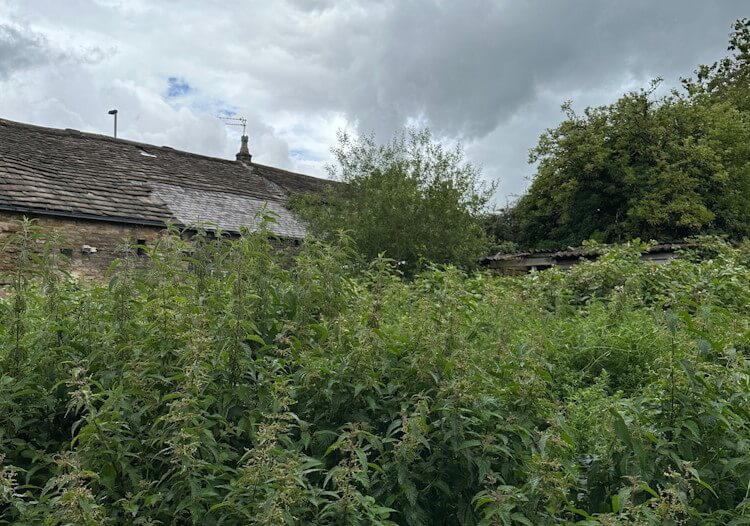
Another potential downside of having an overgrown garden requires special attention because of the major consequences that it could create for the structural integrity of your home, and that’s Japanese knotweed, an invasive plant that can cause subsidence when left untreated.
The negative associations of an overgrown garden outlined in the previous section of this guide can likely be overcome, either through adjusting your selling strategy or if you find a buyer that is still willing to make a competitive offer and do the work of fixing the garden themselves.
Where you might have a harder time attracting good offers is if you have Japanese knotweed present in your garden as a result of letting it get overgrown. There are some estimates that suggest having Japanese knotweed at a home could lower the potential sale price by 15 percent, but this will depend on the scale of the problem and any damage to the house.
Beware that removing Japanese knotweed could be a very costly and lengthy process, with an article on Metro’s website saying it might take up to three years to completely remove – and that may be far too long for many homeowners to wait with selling.
Just as you will have to decide whether to spend effort and funds on fixing an overgrown garden, you’ll need to assess whether you want to invest in removing Japanese knotweed at your property. The next section of this guide will guide you through the options you have available if you’d like to pursue some corrective work at your home before selling it.
Taking steps to clear your overgrown garden before sale
One option to consider is spending money and time on trimming your overgrown garden, which can either be something you could do alone or pay experts to do, depending on the scale of the problem. But you should only pursue this work if it’s something that you can afford, because otherwise you risk adding to your selling expenses should the work require a lot of funds.
Tasks that can be done to help tackle an overgrown garden include the removal of some plants, trees, shrubs or other growth, weeding the garden, mowing the lawn, pruning hedges and trimming branches and various other steps that can make the garden no longer overgrown.
Once you’ve removed the overgrowth from your garden, you could then spend some money on new plants, shrubs and other items that might improve the appearance of the green space, as explained on the Property Road website. But this is also something that could take many weeks or months and therefore might not be an option for those owners trying to sell fast or keep costs low.
Selling your house with an overgrown garden as is
If you’re a homeowner that doesn’t have the money, time or other resources needed to trim your overgrown garden before selling your property, then getting a sale is still achievable.
Although an overgrown garden could potentially make it more difficult to find a buyer for your property, don’t be concerned that it will be unsellable. You still have steps that you can take to attract a competitive and speedy offer even for a home with an overgrown garden.
The best option in this situation would be getting in contact with a quick home buying company, such as LDN Properties. Founded more than 15 years ago, this company makes fast and fair offers to purchase almost any type of leasehold or freehold house, regardless of any problems that might be associated with the property such as having an overgrown garden.
A further benefit of using legitimate quick buyers is that they won’t charge you any fees for selling your property, which can help with keeping your overall selling expenses low.
And as the name suggests, they are called quick buyers because they should be able to complete the entire process of purchasing your house in just a handful of weeks – including the time it takes to pay you the proceeds and the important step of exchanging contracts.
Four options to find a buyer for a home with an overgrown garden
One of the most important decisions you’ll make when selling a property with an overgrown garden is choosing how to find a buyer. Generally, you can choose among selling to a quick buyer, selling with an auctioneer, selling with an estate agent, or selling on your own.
There are clear benefits linked with some of the options, for example it will only take a few brief weeks to complete the timeline for selling a home to a quick buyer. Other methods have some noticeable drawbacks, such as having to pay commission that will be deducted right away from the sale proceeds if you opt for selling your property via an auctioneer or an estate agent.
Write down your main aims with selling your home including how fast you would like to secure a sale, your preferred sale price and whether you are willing to pay any commission. Next, compare these targets against the specific details of the four approaches detailed below. This should assist you with identifying the selling method that best pairs with your needs.
Selling to a quick buyer
Quick buyers are companies such as LDN Properties that have the financial ability to buy all types of leasehold and freehold homes immediately, without the need to wait for weeks or months to initially get approved for a mortgage to cover the cost of the purchase. This shortens the typical timeline for selling to a quick buyer to just a few short weeks, and that includes the time it takes for important steps such as paying you the proceeds and exchanging contracts.
These companies can also help to keep your selling expenses low, because the honest quick buyers will never make you pay any commission to sell your property. That results in a streamlined, no-stress and zero-fee to find a buyer for your home with an overgrown garden.
And quick buyers are also highly experienced at making speedy and fair offers to buy properties that others might consider to be problematic. LDN Properties, for example, has been buying and making offers on freehold and leasehold properties across the UK since 2003 and its purchases have included not only houses with overgrown gardens but also unmortgageable flats, smoker’s homes, properties without a structural warranty, Airey homes, houses with an absent freeholder, flats with a Section 20 notice, properties near traffic lights and many other wide-ranging situations.
Selling with an auctioneer
You could also consider selling your home with an auctioneer, where your property will be listed for a certain price and then people can place ever-increasing price bids on it. The aim is to have many people interested in the property so that they keep trying to outbid each other with much higher value bids, which then should hopefully result in you making a decent sale profit.
The auctioneer will handle much of the work involved with selling your home, such as creating a listing that describes the property and features photographs of the interior and exterior. They will advertise this listing to generate interest in your home, and they will host the auction itself.
As part of this process you’ll have to choose a reserve price, which is the lowest price at which you are comfortable selling your property. If you receive just a single bid at this price, that is deemed a binding legal agreement to sell your home, and the buyer could sue you to enforce the sale if you try to walk away from it. That’s why you must pick a reserve price that should still generate a profit from the sale even after you have paid the auctioneer their commission.
Those fees are typically charged as a percentage of the home’s final sale price, and this will increase your overall selling costs as it will be taken out of the sale proceeds immediately. If avoiding the need to pay commission is your top priority when selling your house, you should look at some of the zero-fee options in this guide, including selling to a quick buyer.
This is also not the quickest option for selling a property, because there are several delays involved. You will have a wait of many weeks or months between when you decide to sell your property and when the auction takes place. And even if your home does sell at an auction, the buyer typically has about a month to complete all of their paperwork and other tasks.
Some auctioneers might be willing to negotiate a shorter deadline for the buyer to finalise their required actions, or to lower the commission or have the buyer pay some of your costs. It’s a good idea to ask individual auctioneers about whether these might be possible options.
Always ask individual auctioneers if they have any experience with successfully selling properties that have an overgrown garden. An auctioneer that has never managed to sell such a house in the past might not know how to advertise your home, and it may fail to get any bids. Avoid using any auctioneers that have never sold your type of property in the past.
Selling with an estate agent
Much like an auctioneer, an estate agent will take on most of the effort involved with selling your property with an overgrown garden. That includes preparing the listing, advertising it in their office, online and in local newspapers, organising viewings where they can take prospective buyers on a tour of the property, and fielding serious offers from specific buyers.
For doing all of this week, the typical estate agent will charge you commission. This fee will be deducted straight away from the sale proceeds, which will add to your expenses. If you are looking to keep your selling costs low then you might wany to consider other options, such as selling to a no-fee quick buyer.
Note that some estate agents might charge higher rates of commission, whereas other companies might be willing to negotiate a lower rate of commission if you ask them.
For those homeowners looking to sell as fast as possible, you might want to consider other options. That’s because selling via an estate agent can take many months, and you should not be surprised if it takes more than an entire year before you get a serious offer from a buyer.
Beware that even if you get an offer on your home when selling this way, the buyer could withdraw the offer any time up until just before contracts are exchanged, and they won’t face any penalties. This will significantly delay the selling process, because you will effectively have to start over with trying to find a buyer, potentially adding many months to the timeline.
Some estate agents also might not have any expertise with selling houses that have an overgrown garden, which implies that they would find it difficult to generate interest from buyers in your property. You should ask individual estate agents about their track records with selling homes like yours, and avoid using the services of a company with zero such experience.
Selling on your own
A fourth option for selling your home is doing so on your own, and this means you have to handle every step of the process – from creating and marketing a listing, organising and hosting viewings, and hearing offers from buyers, hopefully taking one to exchange of contracts.
It can be a large amount of work even for experts, and that’s why this method is only recommended for homeowners with experience selling properties, or those owners that have a suitably qualified friend or family member that might be willing to help them out without a fee.
Otherwise, you could be looking at perhaps the slowest method for selling your home with an overgrown garden, as it might take more than a year before you get a genuine offer.
Just as potential buyers can withdraw an offer up to the exchange of contracts when selling via an estate agent, the same is true when selling without any assistance. If that happens then you’d have to begin again with your search for a buyer, extending the process even further.
Selling on your own does have the advantage of avoiding you having to pay any commission to a third party like an auctioneer or estate agent. But this cost saving could be wiped out by the money that you’ll have to spend on advertising your property to attract interest from buyers.
If you would like to avoid fees when selling but get a much swifter sale, you should get in touch with LDN Properties or another legitimate quick property buyer. These companies make competitive and fast offers to buy almost any age, condition, location, shape, size or type of home, including houses with overgrown gardens. They promise never to charge any fees, and they can typically complete the purchase of a property within weeks of their initial offer.
Top queries and answers about selling a property with an overgrown garden
Homeowners thinking of selling their home fast sometimes have questions to be answered, ranging from the amount of repairs needed before selling through to selling an uninhabitable home. Here are some of the top questions we’re asked about selling a house with an overgrown garden:
Your top questions when selling property with an overgrown garden
If you have a garden at your house and it is overgrown, this means the lawn, trees, shrubs, plants and more are not trimmed or maintained and start to grow into each other. This can create an unappealing look for your garden, and there are many potential buyers who might lose interest in making an offer on the property just because of the overgrown garden.
Appearances matter when selling a home, and some people will simply not have any interest in making an offer on a property that has an overgrown garden. Other potential buyers might be worried that the cost and time involved with trimming the garden as the next homeowner would be too much, and there are also concerns about overgrown gardens leading to pest problems.
One way to remove buyers’ concerns about an overgrown garden is to trim the growth and make it look presentable and well-maintained. Whilst this can help to make more your home more appealing to buyers, it could also require a significant amount of effort, money and time and it should only be pursued if it’s work that you are willing to wait to be completed.
Yes, and it can help you to get a much faster sale. If you’re unable for any reason to trim your overgrown garden, you could still get a rapid and competitive offer if you sell the property to a quick buyer like LDN Properties. These companies are experts are buying homes others would consider problem properties, and that includes houses with overgrown gardens.
You can visit the website of The Property Ombudsman (TPO), an organisation that issues rules to guard homeowners from falling victim to fraud in the quick buying industry. TPO’s website maintains a database of all official members, and they all commit to following those rules. Do not sell your home to a non-TPO company because it could potentially be a scam.
Your best options to not pay commission when selling your property are either selling without any assistance or selling to an honest no-fee quick buyer like LDN Properties. If you decide to use an auctioneer or an estate agent to sell your home with an overgrown garden, this will add to your costs because you’ll have to pay them fees that will be taken out of the sale proceeds.
Typically, the quickest way to sell a home with an overgrown garden is by contacting a quick buyer, because they can finalise the entire process within just a few short weeks. By contrast, the other three common methods for selling a property – doing so with an estate agent, an auctioneer or on your own – can all take many months, and possibly even longer.