Quick navigation
If you are the leaseholder of a flat, you might have received a Section 20 notice from the freehold owner of the property asking you to contribute money toward work on the building. Having one of these notices can sometimes make the sale of your flat more difficult, but this guide offers advice on how you might still be able to get a competitive and speedy offer.
- What is a Section 20 notice for flats?
- The process of issuing a Section 20 notice
- Are freeholders required to issue Section 20 notices?
- How a Section 20 notice can affect the sale of your flat
- Will you pay Capital Gains Tax when selling your flat?
- Four options to sell your flat with a Section 20 notice
- Top queries about selling a flat with a Section 20 notice
What is a Section 20 notice for flats?
Section 20 notices are a requirement that the freeholder owner of leasehold flats consult with the residents of those flats if they are planning to pursue significant physical work on the properties for which the leaseholders will be asked to spend more than £250.
Freeholder owners are those people that own not only a building, in this case a block of flats, but also the land on which that property is located. By contrast, leaseholder owners are those that own one of the flats for a set time, typically many years, in exchange for paying the freeholder a yearly ground rent.
If the building that houses a block of flats requires some extensive construction work, such as a complete renovation of common shared areas like the entrance area, replacing all the exterior windows, repainting the building, placing a new roof, installing a new lift and more, then the freeholder can ask the leaseholder flat owners to pay toward the costs of that work.
Section 20 is designed as an opportunity for leaseholders to provide comments, raise disputes and otherwise have a voice in the process before they have to spend any money.
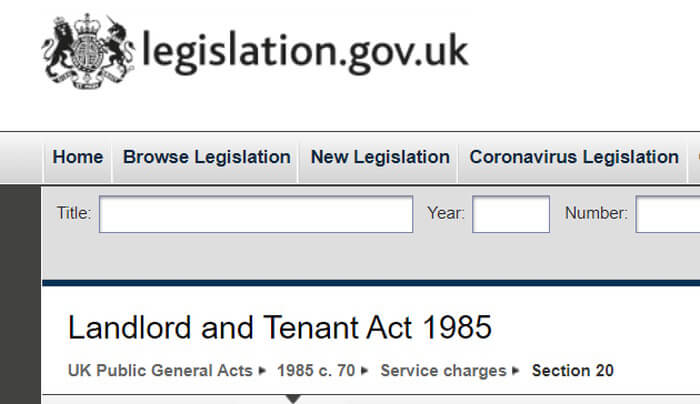
The name of the requirement comes from Section 20 of the Landlord and Tenant Act 1985 as detailed on the UK Government website and it says that as a leasehold owner of a flat, you are given a right for consultation by the freehold owner about any financial charges that might occur for you as a result of major work they have planned for the building, if it will cost you more than £250 for planned work, or £100 a year for services and work lasting over a year.
The process of issuing a Section 20 notice
Discussed on the Leasehold Advice Centre website there are at least two steps involved with the usual process for a freehold landlord when issuing a Section 20 notice to leasehold flat owners, and sometimes there is also a third step depending on the unique situation.
The first step requires the freeholder to first issue what’s known as a "Notice of Intention to Carry Out Works" which should outline the planned work that they intend to have done on the building, for example the installation of a new lift or significant repairs. This notice is required to be sent to every leaseholder that will likely have to contribute more than £250 to the work.
It also starts an important consultation process, because this notice sets a 30 day deadline for leaseholders to weigh in on the planned work as well as the reasons given for doing it. For example, you could nominate a contractor to do the work in lieu of who the freeholder is recommending, particularly if you believe that your contact can do the work for less money.
The second step occurs after those 30 days of consultation have expired, and it requires that there be two or more estimates of the cost involved with doing the work. One estimate can be from the freeholder but another must be from someone that has no connection to them.
All leaseholders affected by the Section 20 process should be given a chance to review these estimates, which should provide a detailed explanation of the expected costs of the various options for pursuing whatever work the freeholder would like done on the property.
Along with the statement of the estimates, the freeholder is required to give you and the other leaseholders a notice that outlines the amount of time that you the work is expected to take, as well as information on how you have 30 days to provide written input on the estimates, along with the address where that information is required to be sent if you’re providing it.
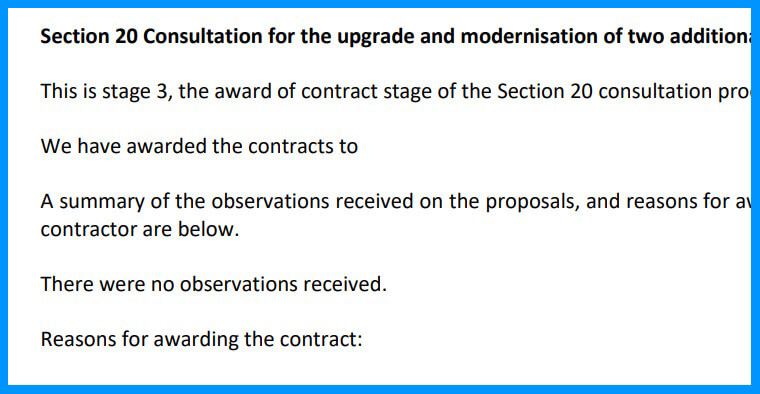
Finally, after the consultation time has expired, if the freeholder selects a contractor to do the work that did not provide the cheapest estimate, then the freeholder must give the leaseholders a "Notice of Reasons" that explains the reason for not selecting the lowest cost option.
Note that leaseholders do have the ability to challenge the freeholder’s final decision under Section 19 of the Landlord and Tenant Act 1985, which allows for leaseholders to seek a tribunal on whether the freeholder’s decision was a reasonable decision. If you can successfully challenge the selection of a contractor that you think is unreasonably expensive, you and the other leaseholders will have to pay no more than £250 for any major work done at the property.
Are freeholders required to issue Section 20 notices?
As a general rule (shown in Freehold-sale.co.uk), freehold owners of a block of flats will not have to give you a Section 20 notice if the contribution that you’ll to pay for planned work at the property will be less than £250.
Freeholders will usually pursue Section 20 notices for applicable work even if they believe they have a good relationship with their leasehold flat owners that might otherwise remove the need for the formal consultation process. Otherwise, the freeholder is taking a risk that one or more of the leaseholders could ultimately refuse to pay their contribution toward the work, which would put the freeholder and the other leaseholders in a difficult financial position.
Therefore, unless the work that is being carried out would require a contribution of less than £250 per leaseholder, you will likely be issued a Section 20 notice by the freeholder.
How a Section 20 notice can affect the sale of your flat
If you are looking to sell your flat fast but have received a Section 20 notice, you might find that this complicates the selling process.
Primarily, the concern that some buyers might have will be about having to spend money on the work if the Section 20 notice process is still underway. They might fear that the process will not be complete before they move in, yet they will not have had any say in the selection of the contractor, and could end up owning a lot of money for the work soon after they move in.
You might find that other buyers could struggle to get approval for a mortgage from a lender if the property has a pending Section 20 notice. The lender might worry about how much the work will ultimately cost and how it might affect the value of the property. And if buyers are unable to get a mortgage to pay for the purchase of your flat, they won’t be able to complete the sale.
A Section 20 notice could also make some buyers wary about making an offer on your property because they might fear that the flat has some inherent structural or other problem. This can lead some potential buyers to either significantly reduce the amount of money that they’re willing to offer for the flat, or alternatively lose interest in purchasing the flat altogether.
Although a Section 20 notice can complicate your ability to sell a flat to a private residential buyer, one way to overcome this situation is by contracting a quick buying company such as the London-based LDN Properties. These companies have plenty of experience with purchasing all types of freehold and leasehold houses, flats and commercial properties – including leasehold flats that have pending Section 20 notices. It’s one solution for still obtaining a competitive and speedy offer for your flat and overcoming any hurdles that a Section 20 notice may create.
Will you pay Capital Gains Tax when selling your flat?
If you’re able to find a buyer for your flat with a Section 20 notice, one factor that you’ll have to consider is whether you might have to pay Capital Gains Tax on the sale of the property, depending on the price at which it sells. Be sure to read guidance on Lease-advice.org for further information on the Section 20 notice process and Capital Gains Tax.
In the UK, Capital Gains Tax is a levy that the government can change on the gain, also referred to as the profit, that you might make when you sell a physical asset, which can cover a wide range of valuable items such as properties, cars, and various other categories.
However, it’s important to understand that there are certain ways that you can either reduce or eliminate your duty to pay Capital Gains Tax, so ask a financial expert about this possibility.
Four options to sell your flat with a Section 20 notice
At the time that you’re ready to sell your flat with a Section 20 notice, you will have to make an important choice about the method that you would like to use for finding a buyer. Typically, you can choose from selling at a property auction, selling via an estate agent, selling to a quick buyer such as LDN Properties, or attempting to find a buyer by selling without any help.
You will discover that each of the methods has its own advantages, but some of the selections also have rather prominent disadvantages, such as taking many months to find a buyer.
Write down all of the important information about the sale of your flat, including your preferred sale price, whether you can accept paying any fees for the sale, and how long you are prepared to wait to find a buyer. Then compare all of this information against the specific details of the four buying options outlined below. This should assist you in trying to find the best option that most ideally matches your wants and needs when selling you flat with a Section 20 notice.
Selling at a property auction
Property auctions are a gamble, as it’s unclear what price you could ultimately get for your flat. You’ll have to choose a reserve price, which is the lowest value at which you can accept selling your property, and if you only get a single bid at that price, the flat is deemed sold.
Note that if you don’t get any bids on your flat then it will remain unsold, and this will add even more time to the selling process as you’ll have to start over with trying to find a buyer.
It can take a long time to complete the sale of a flat through an auction, with a wait of many weeks or longer between when you list the property for sale and when the auction takes place. If you flat does sell at an auction, the winning high bidder will then typically have 28 days to complete their paperwork and all the other steps required to finalise the purchase.
Some auctioneers might set shorter deadlines for the buyer to complete their tasks, and others might give them even more time than 28 days. You should inquire with individual auctioneers whether they might be open to negotiating a tighter deadline for the buyer to complete their tasks, because this can help to speed up the process if you ultimately decide to sell this way.
You will also have to pay an auctioneer fees for selling your property. This fee will be taken out of the sale proceeds immediately, which will add to your costs when selling.
It’s possible that you might be able to negotiate a lower rate of commission from the auctioneer, or have them make the winning high bidder pay some of your costs, so always ask.
Selling via an estate agent
Another way to sell your flat with a Section 20 notice is through an estate agent, who will limit your workload when selling because they will have the duty to prepare and market a listing that describes your flat and includes photographs of the interior and exterior. They will advertise this listing online, in local newspaper and their office, and organise viewings to take potential buyers on tours of the flat. Estate agents will also field offers, hopefully taking one to completion.
For all of this work, the typical estate agent will require that you pay commission. This fee is subtracted immediately from the slae proceeds, adding to your costs, and making estate agents not a great choice if you want to avoid paying commission.
It’s also not a speedy way to sell a flat, because you might be waiting more than an entire year before you get a serious offer that is taken all the way through to exchange of contracts.
Some estate agents might also not have any experience with selling flats that have Section 20 notices, and if that’s the case then they might struggle with generating interest from buyers in your property. You should always ask individual estate agents about whether they have sold your type of home before, and avoid selling via those who do not have such experience.
Selling to a quick buyer
These companies are known for being able to make fast and fair offers for buying almost any type of freehold or leasehold property no matter its type, size, shape, condition or age.
LDN Properties has been purchasing and making offers on such properties throughout the UK since 2003, and in addition to buying leasehold flats with Section 20 notices, some other examples of the wide range of purchases and offers made include homes without gas safety certificates, vandalised flats, properties that have low Energy Performance Certificate grades, houses situated close to mobile phone masts, storm-damaged properties, homes that have septic tanks, and many other situations. If you are selling a commercial property such as a care home or nursing home, it can also be a good idea to get in touch with LDN Properties.
They are called quick buyers because they have the financial resources available to buy all types of properties right away, without having to wait for many weeks or months to win approval for a mortgage loan to cover the cost of the purchase. As a result, they can complete the purchase of your flat typically within weeks, and that includes that time it takes to exchange contracts. This makes them often the speediest method available for trying to sell a property.
An additional pro of selling to a quick buyer is that the legitimate companies will never make you pay any commission, which will help to keep your overall selling costs low. By contrast, estate agents and auctioneers will charge fees that will be taken out of your final sale proceeds.
Selling without any help
A fourth option for selling your flat is to do so without any help, which means that you will have to do all of the work for finding a buyer – preparing and advertising a listing for your flat, organising and hosting viewings, and fielding a serious offer through to completion.
This can be a large undertaking and should only be done if you have a family member or friend who has experience with selling your type of flat and might be willing to help you sell yours without charging you anything, or if you have the same experience. Otherwise, you will have to invest a lot of time and effort in the process, and this can be an incredibly stressful situation.
Selling this way can take a very long time and you should not be surprised if more than a year passes before you are able to get a serious offer from a buyer.
The only obvious benefit of selling this way is that you would not have to pay a third party, such as an auctioneer or estate agent, any fees for selling your flat. However, this saving can easily be wiped out by the costs you will face in preparing and advertising your flat for sale.
Instead, consider selling your flat to a quick no-fee buyer such as LDN Properties, because you’ll not only get a speedy sale within weeks but you also won’t pay any commission.
Top queries and answers about selling a flat with a Section 20 notice
Flat owners thinking of selling their home quickly typically have questions that need answering, ranging from the selling a property with Japanese knotweed through to selling when major works are taking place in the building. These are the top questions we’re asked about selling a flat with section 20 works taking place: